
News
-
 02 SepBy AdminHow to Choose Automated Commercial Glass Doors for a Business EntranceA business entrance has to do more than look modern. It must move people through smoothly, avoid unnecessary sensor activations, and match the structure that will carry the door operator. That is why automated commercial glass doors should be chosen as a complete entrance system rather than as “glass panels plus a motor.” For a hotel, office, bank, shopping mall, retail store, hospital, or laboratory, start with five questions: how wide the clear opening must be, how heavy each moving leaf will be, how people approach the entrance, what access-control logic is needed, and whether the wall or header can…
 -
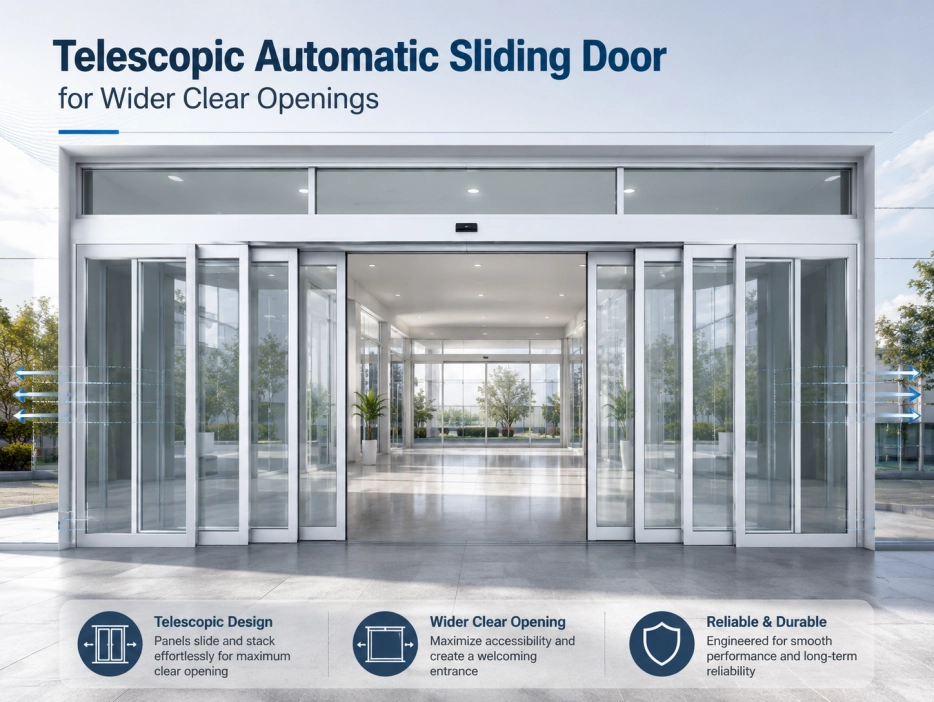
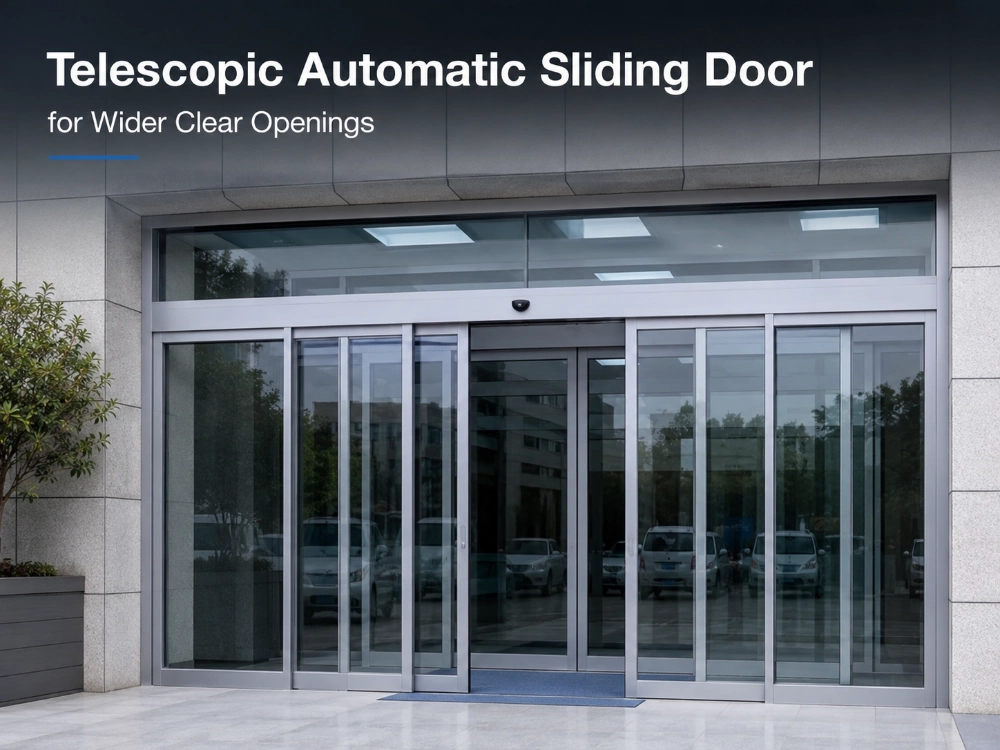
 01 SepBy AdminTelescopic Automatic Sliding Door for Wider Clear OpeningsA wide doorway does not automatically produce a wide usable entrance. With a conventional sliding arrangement, part of the opening must remain available for the moving leaf to park when the door opens. On projects where pedestrian flow demands a larger passage but lateral stacking space is limited, a telescopic automatic sliding door can solve that layout problem more efficiently. Instead of relying on one large moving panel on each side, multiple movable glass leaves travel in sequence and overlap as they open. This makes the relationship between the total doorway width, clear opening, moving-leaf width, and parking space very…
 -
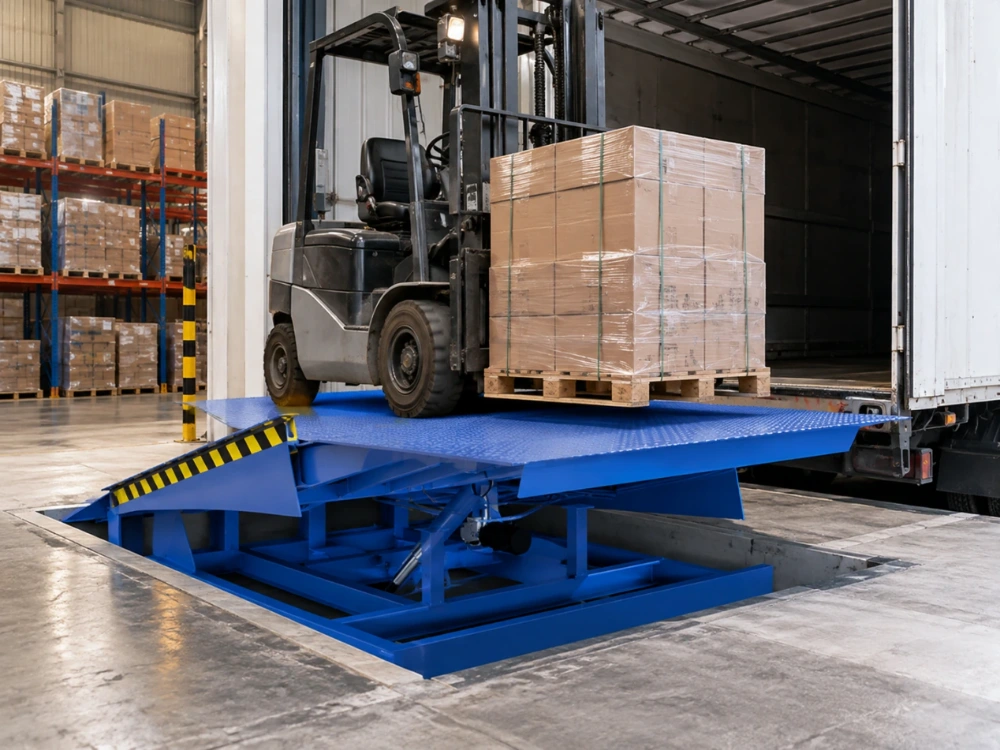
26 AugBy AdminHow Much Load Capacity Does a Warehouse Dock Leveler Need?A warehouse dock leveler should not be selected from pallet weight alone. The more useful starting point is the heaviest forklift that will actually cross the platform, the maximum load it carries, and what happens while that combined weight is moving between the loading dock and the truck. That distinction matters because a parked machine and a moving forklift do not place the same demand on a platform. Braking, acceleration, wheel concentration, transition angle and daily traffic all affect the working condition. For procurement teams, this changes the question from “How many tons is my cargo?” to “What is the…
-
 25 AugBy AdminHow Do You Choose Industrial Doors When Headroom Is Limited?Limited headroom does not automatically rule out an overhead door. What matters is how much usable space remains above, behind, and beside the opening, and what occupies that space after the door is installed. For a warehouse or factory project, the first decision should therefore be the lifting path, not the door color or motor brand. A standard lift may work where there is little space above the opening but enough ceiling depth. More vertical clearance can support a high-lift or semi-vertical arrangement. Where the wall continues well above the opening, a vertical lift can keep the door almost entirely…
 -
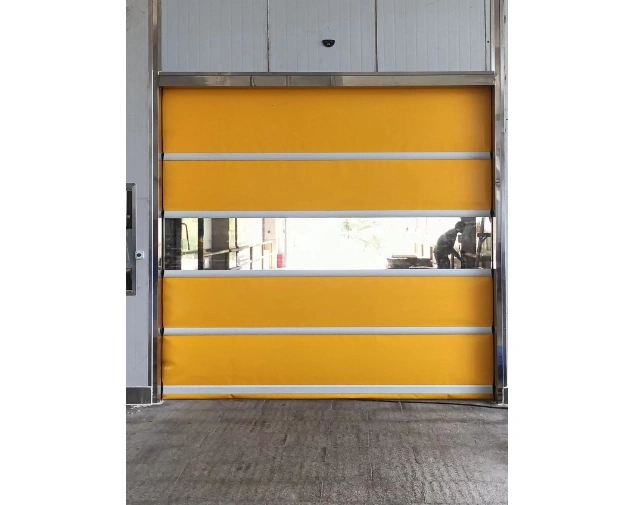
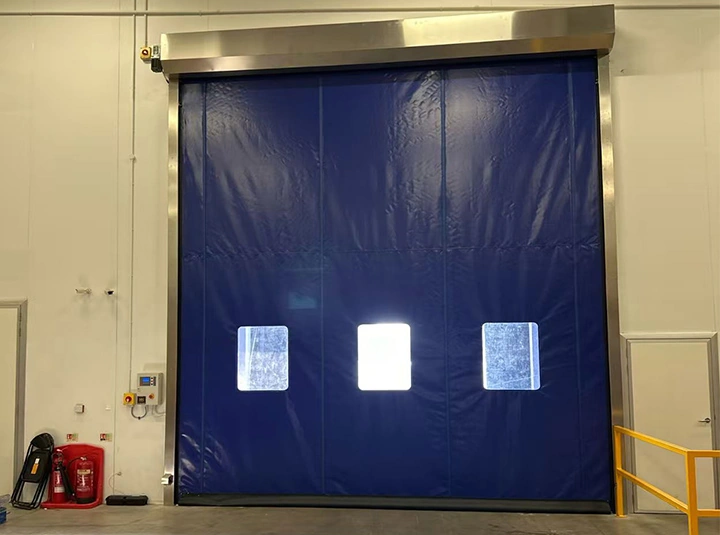
 19 AugBy AdminWhy Does a High-Speed Door Keep Opening or Refuse to Close? Sensor Troubleshooting GuideHigh speed door troubleshooting should start with the exact symptom, not with replacing the motor or control box. A door that keeps reopening often points toward an unwanted activation signal, while a door that opens normally but refuses to close can be reacting to a safety input that still reads the passage as occupied. That distinction saves time. A high speed door sensor may be working normally while the detection area, alignment, or site traffic has changed. Watch one complete cycle: what triggers opening, what happens during closing, and which device is active. Key Takeaways Repeated opening can occur when…
 -
 18 AugBy AdminPVC Strip Curtains vs High-Speed Doors: Which Is Better for Busy Warehouse Openings?PVC strip curtains are usually enough for a lightly used internal opening, while high speed doors make more sense when traffic, environmental separation, and automatic control become part of the daily workflow. The point isn't to replace every simple barrier with a powered door. It is to recognize when an opening has become too important to be managed as a passive partition. A warehouse entrance can change quickly. A secondary passage starts carrying forklifts, or a packing area becomes temperature controlled. What once worked as a simple curtain begins to affect traffic flow and air exchange. That is where the…