




How Should a Warehouse Choose Dock Leveler Lip Length?
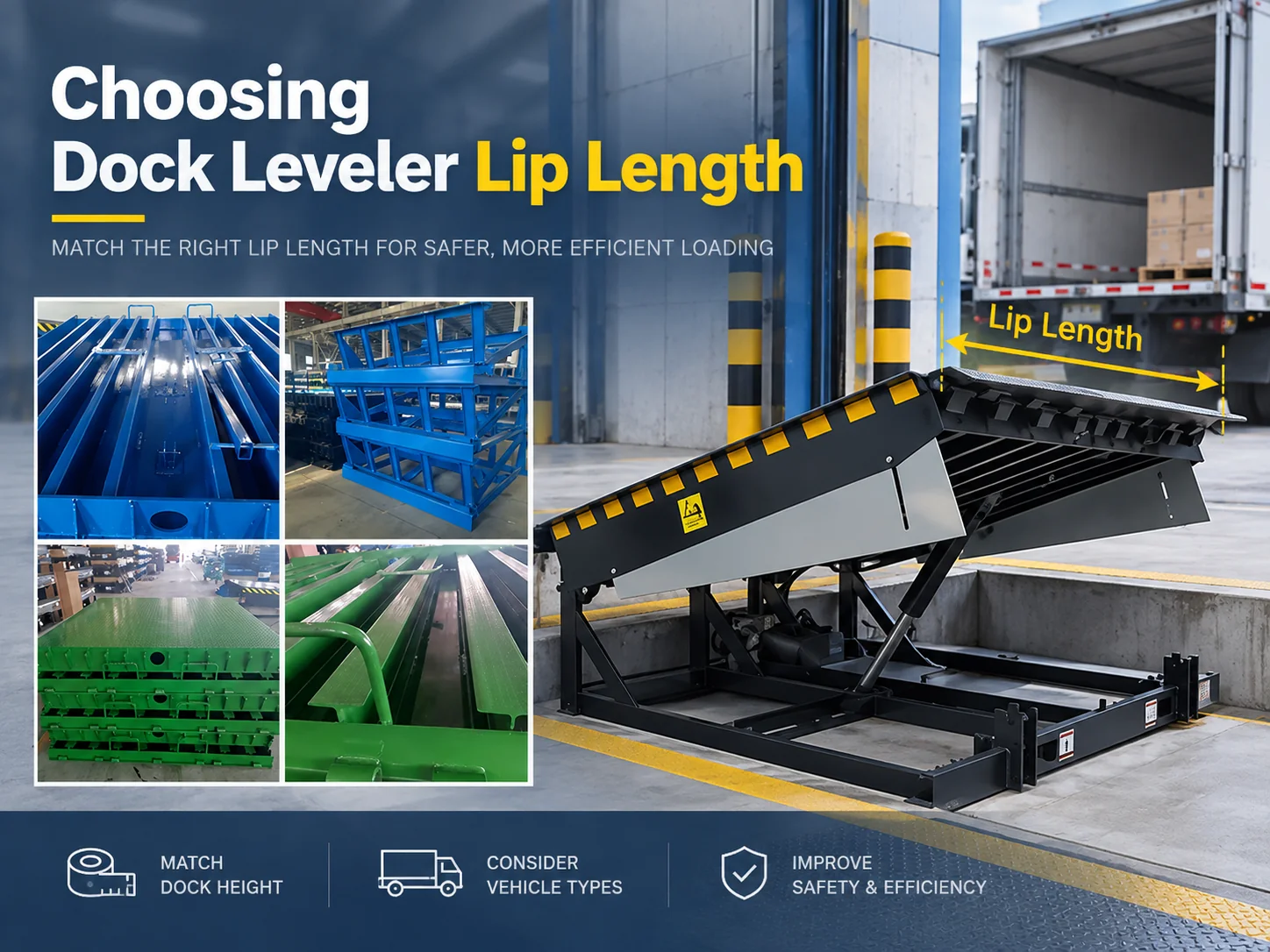
Choosing dock leveler lip length is not a matter of picking the longest option in a catalogue. The lip has one practical job: reach far enough past the dock face and bumpers to engage the truck or trailer bed reliably while the rest of the leveler still operates within suitable geometry. That means the right answer comes from measurements at the bay, not from a universal “ideal lip length.”
Warehouse buyers can use a simple sequence: establish where the vehicle bed actually sits, calculate how much reach is needed beyond the bumper line, check the normal variation in the fleet, and only then decide whether a conventional fixed reach or a controlled telescoping extension is the better configuration to evaluate.
Measure the Reach Before Choosing the Lip
A nominal lip dimension means little until it is tied to the physical gap between the dock and the vehicle. Common air/hydraulic dock-leveler lip lengths include 16, 18 and 20 inches, with roughly 12 inches of projection beyond the dock bumpers used as a typical planning example. Those dimensions are reference points, not a substitute for measuring the bay. The real question is how much usable lip remains on the trailer bed after bumper projection, vehicle setback and approach geometry are accounted for.
The lip must extend sufficiently into the truck or trailer bed to provide firm support. For one common equipment-planning example, at least 4 inches of support is used at the vehicle bed. Treat that as an equipment-specific planning value rather than a universal code minimum: the final contact requirement still depends on the leveler design and manufacturer.
Start at the Dock Face and Bumper Line
Begin with a fixed reference. Measure from the dock face to the outer working face of the bumpers. A typical dock-leveler planning example aims for roughly 12 inches of lip projection beyond the dock bumpers, so bumper thickness directly changes how much nominal Lip Length remains available to reach the vehicle bed.
Bumper projection matters because part of the nominal lip length is consumed simply reaching past that line. When the bumpers project farther from the dock face, the same lip leaves less support on the truck or trailer bed. A lip that sounds adequate on paper can therefore lose useful contact once the actual bumper arrangement is included.
Record the bumper projection at the actual bay, including any non-standard mounting or wear that changes the working face. On a new dock, use the intended bumper arrangement rather than assuming a generic dimension.
Measure Where the Trailer Bed Actually Sits
Next, measure the vehicle side of the gap. The trailer bed may sit close to the rear frame, or it may be recessed behind bumpers, steps, doors or refrigeration hardware. Refrigerated trailers are one common case in which the loading surface can sit farther back, increasing the required reach.
This is where the phrase “how to measure lip length” becomes more useful as a process than as a single measurement. You are not measuring only the steel lip itself. You are establishing the distance the lip must bridge from the dock reference to a stable contact zone on the vehicle bed.
Take measurements with the vehicle in its normal docked position. Facilities handling several trailer types should note the bed setback for each important group rather than treating the first truck measured as representative.
Use the Fleet’s Worst Normal Position, Not One Truck
A mixed fleet can make an apparently correct lip unreliable. One trailer may sit close to the dock, while another has a deeper rear step or different bumper arrangement. The design condition should therefore reflect the worst normal position the bay is expected to serve, not an extreme accident case and not the most convenient truck in the yard.
Create a small measurement table with vehicle type, docked setback, bed height range and any rear obstruction that changes where the lip can land. This also keeps the decision separate from general dock leveler dimensions such as overall platform width and pit size. Those dimensions matter, but they answer different parts of the specification.
Translate Required Reach Into a Lip Configuration
Once the required reach is clear, the buyer can evaluate the lip mechanism rather than guessing from product names. A useful comparison is whether the bay has a predictable landing position or needs controlled variation in extension. GUDESEN’s existing dock leveler configuration guide addresses the broader flip-plate versus telescoping decision; the present task is narrower and starts with the reach the bay actually requires.
When a Predictable Position Supports a Fixed Reach
A more predictable dock can often be evaluated around a conventional hinged-lip reach: the bumpers are known, the trailer fleet is relatively consistent, and the bed contact zone falls in a stable location. In that situation, a standard nominal lip length may be sufficient once the projection beyond the bumpers is checked.
That does not mean “16 inches is always enough.” With a 4-inch dock bumper, a 16-inch lip leaves about 12 inches of projection beyond the bumper face in a common planning example. Increase the bumper projection or move the trailer bed farther back and the usable projection changes immediately. The ideal lip length is therefore the one that produces suitable engagement for the measured bay, not the one that appears most often in a specification table.
When Variable Setback Makes Telescoping Extension Useful
Where vehicle setback varies more, controlled extension becomes relevant because the lip can be positioned to reach the vehicle bed rather than relying on one fixed projection. This can be useful when a bay handles mixed vehicles or rear geometries that do not present the same landing point every time.
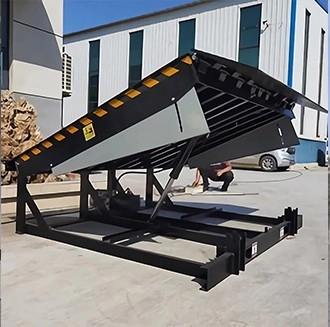
GUDESEN offers a telescoping-lip dock leveler within its unloading-platform range. On the current product page, the displayed standard configurations list a 1000 mm extension length. That figure must be read correctly: it is the listed extension length of those telescoping configurations, not a universal GUDESEN lip length and not the same measurement as a conventional 16-, 18- or 20-inch hinged lip.
That distinction matters during procurement. If a quotation says “lip length” while a product table says “extension length,” ask the supplier to identify the reference points for each number. Two values can describe different mechanisms and should not be compared as though they were interchangeable.
Check Geometry Before Assuming a Longer Lip Is Better
Extra reach can solve a setback problem, but it is not free geometry. Dock-leveler dimensions and platform length affect the slope between the dock and truck, while the dock-to-truck height difference must remain compatible with the grade capability of the material-handling equipment crossing the platform. Horizontal reach and vertical transition therefore have to be checked together rather than solved with lip length alone.
This is why lip selection should be checked together with platform length, dock height, vehicle bed-height range and approach conditions. A longer lip can change the leveler’s usable operating geometry, so extra reach is not automatically an improvement. If the facility is also deciding what the platform must carry, keep that as a separate calculation: GUDESEN’s warehouse dock leveler capacity guidance covers the load question, while lip reach is about where and how the platform engages the vehicle.
For an existing pit, record its width, length and depth before a model is selected. GUDESEN’s current telescoping-lip table, for example, shows specific platform and excavation dimensions for its listed standard configurations. Those values are useful for checking that a chosen model matches the project, but they are not dimensions that should be copied onto another bay without verification.
The practical test is therefore two-dimensional: can the lip reach the intended contact zone, and can the complete leveler make that connection through the bay’s real vertical and horizontal geometry? If either answer is uncertain, more lip length alone is not the solution.
What to Send Before Finalizing the Dock Leveler
A supplier can make a much better configuration check when the enquiry describes the bay instead of asking only for “a longer lip.” Before requesting a quotation, assemble the information that determines reach and fit:
- finished dock height and the normal truck or trailer bed-height range;
- dock bumper projection from the dock face;
- typical trailer types and any refrigerated trailers, rear steps, doors or bumper structures that move the bed contact zone farther back;
- measured trailer-bed setback in the normal docked position;
- the range created by the mixed fleet, including the worst normal position the bay must serve;
- existing pit width, length and depth, or the planned pit dimensions for a new installation;
- driveway approach conditions that noticeably change the vehicle’s position relative to the dock; and
- photos or a simple side-view sketch showing the dock face, bumper line and trailer bed.
This checklist is more useful than asking for a generic “standard” lip because it gives the supplier the inputs needed to confirm reach against the actual bay. It also prevents unrelated decisions from being bundled into one number. Platform capacity, pit fit, lip mechanism and required reach can then be checked separately and brought back together in the final equipment configuration.
For procurement teams comparing quotations, ask each supplier to state what its quoted lip or extension dimension measures, what vehicle position it assumes, and what contact condition the configuration is intended to achieve. That makes different proposals much easier to compare on the same basis.
Conclusion
The correct dock leveler lip length is the reach that works with the real dock-and-vehicle geometry, not the longest available option and not a universal catalogue number. Measure the bumper line, trailer-bed setback and normal fleet variation first; then decide whether a predictable fixed reach or controlled telescoping extension fits that operating pattern. Finally, check platform and pit geometry so extra reach does not create another constraint. For a GUDESEN loading-platform enquiry, use the measured bay geometry, vehicle mix, bumper projection and pit dimensions as the basis for confirming the configuration before ordering.
FAQs
Q1: What is a common dock leveler lip length?
A1: Common air/hydraulic dock-leveler lip lengths include 16, 18 and 20 inches, and a typical planning example uses roughly 12 inches of projection beyond the dock bumpers. These are reference dimensions, not a universal answer. Required reach still depends on bumper projection, trailer setback and the contact zone on the vehicle bed.
Q2: How do you measure the required lip reach?
A2: Start from the dock face and measure the bumper projection, then record where the trailer bed sits in its normal docked position. Repeat the check for the important vehicle types in the fleet. The useful result is the reach needed to pass the bumper line and maintain suitable bed engagement, not simply the physical length of an existing lip.
Q3: When is a telescoping lip useful?
A3: A telescoping configuration is worth evaluating when the required landing point varies because of mixed vehicles, deeper rear setbacks or other geometry that makes one fixed projection less suitable. Its extension dimension should be treated as a mechanism-specific value and checked against the actual bay, rather than compared directly with a conventional hinged-lip length.