




Dock Leveler Power Requirements: What a Hydraulic Platform Needs
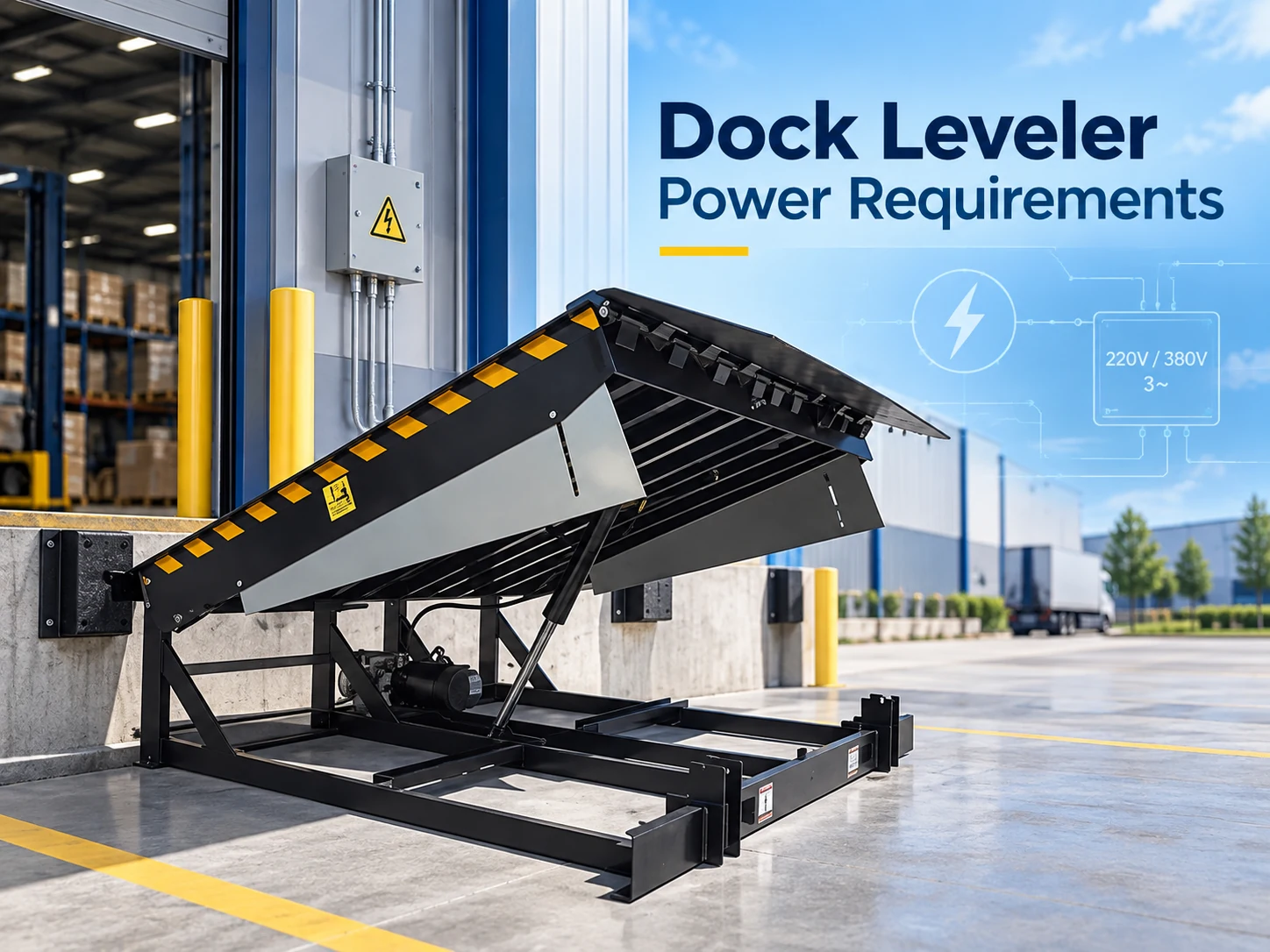
Dock leveler power requirements are usually discovered on installation day rather than at the quotation stage. Equipment is ordered as a platform, the bay is prepared around a guessed supply, and the two only meet when the installer arrives. The decisions that matter are made earlier: what the drive has to move, what the building has to provide for it, and what the bay does if the supply fails while a load is on the lip.
What a Powered Dock Leveler Needs From the Building
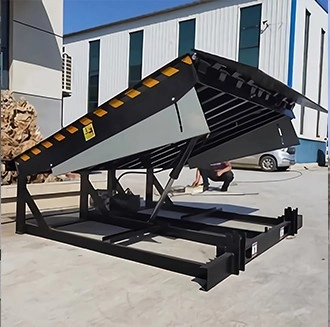
Loading dock levelers are the one piece of bay equipment that changes height while a trailer is standing there, so the building side of the decision is about the drive and the operator, not about the door opening. Two things have to be settled with the platform, not after it: where the supply and its protection sit, and where the controls will be used.
Supply, Protection and the Isolator Position
The supply has to reach the platform without crossing the traffic path, and it has to be isolatable at the bay so maintenance can work on the drive while the rest of the site keeps running. Motor protection on loading dock levelers is worth a specific look: the mobile loading and unloading platform is documented with a high-performance motor at protection level IP55 or above, which tells the reader what to expect from a platform motor in a dusty or wash-down bay rather than leaving the class unspecified.
On hydraulic dock levelers that rating is the motor’s own protection class. It is not a supply, a circuit or an installation specification, and the platform type decides what the drive actually needs.
The Control Point and How the Platform Is Operated
Control position is a bay decision as much as an electrical one. The operator needs to see the lip meet the trailer bed while standing clear of the vehicle, and anyone servicing the platform needs the isolation point to be reachable without stepping into the forklift route. Getting the controls and the isolator onto the drawing with the platform, rather than adding them afterwards, is what keeps the installation to a single visit.
How the Platform Actually Moves
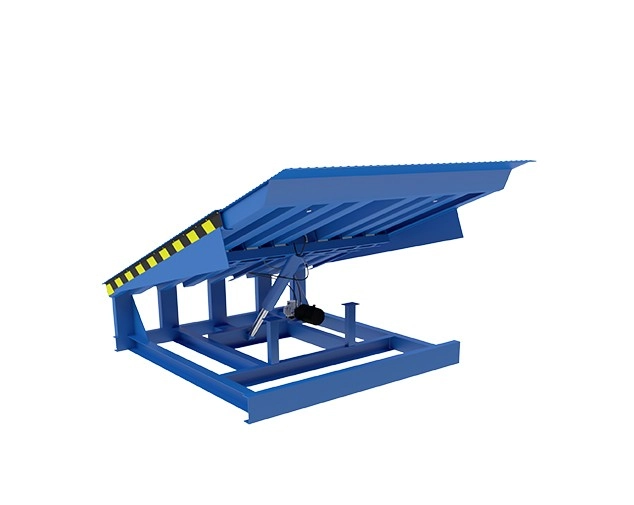
How does a dock leveler work when the drive is being planned? Before any supply conversation, it helps to know what the drive is being asked to do. A powered platform produces two distinct movements: the main board or table rises, and the lip plate reaches out over the truck bed. How those two movements are produced is what separates one platform from another.
The Cylinder Sequence on a Hydraulic Platform
Hydraulic dock levelers document the sequence rather than leaving it to assumption. The telescopic unloading platform uses the hydraulic principle: the main board cylinder lifts the countertop and a smaller cylinder pushes the mouth plate out, and lowering the platform places that plate on the rear of the truck. The flap unloading platform produces the same overlap differently: the main board cylinder lifts the table panel and a small oil cylinder flips the lip plate over the bed as the platform lowers. The telescoping lip platform is where that plate is pushed out instead of flipped, which is the arrangement the rest of this section describes.
Two cylinders, two jobs: that is how does a dock leveler work on the hydraulic side, and it explains why the drive side is planned with the platform rather than with the door.
What a Mechanical Platform Changes
Not every loading dock leveler is powered. The tilt loading and unloading platform is produced in a hydraulic version and a mechanical version, so the same bay can be served without a powered supply at all. Settling which platform family suits the traffic is a selection decision; this article keeps to what that choice means for the supply.
Planning for a Supply Failure
A bay that plans only for normal operation has planned for half of its shifts. The failure case is not the same as a maintenance case, because on a powered platform it can happen with a trailer already against the dock and a load on the lip.
What the Platform Does Without Power
The hydraulic side carries its own documented safeguard. An anti-cracking valve on the oil pipe is fitted so the lifting platform will not suddenly drop its goods if the oil pipe ruptures, and the platform’s oil cylinder and imported sealing ring are documented for stable performance and less maintenance. Both facts describe platform behaviour, not site procedure: the valve is a hydraulic safeguard, and it does not replace isolation or a written routine.
The Bay Routine Around It
What the routine has to cover is the human side of the failure: who clears the trailer, how the load that is already on the lip is finished or taken back, and who is allowed to work on the drive once the supply is isolated. The platform selection guide for flip plate and telescoping lip designs is where the choice between platform families is settled, before any of this is written down. Writing that down is the difference between an incident and an inconvenience, and it belongs beside the platform details rather than in a maintenance file.
Dock Leveler Specifications to Confirm Before Ordering
The dock leveler specifications that matter here are the ones that decide the power arrangement, not the model name. Bring them together and the enquiry stops being a model number:
- the platform type being installed – telescopic, flap or tilt – and whether it is the hydraulic or mechanical version;
- what the drive side needs from the building, including where the supply is taken and isolated;
- the control position and who operates the platform from where;
- the opening and bay geometry the platform has to work with, such as the semi-fixed tilt platform’s maximum tilt of -300 to 450 mm and its steel tongue plate overlap with the truck;
- the traffic and environment the platform faces, including whether the bay is exposed to weather and whether entry and exit safety bumpers are wanted;
- the routine for a supply failure, agreed before commissioning rather than after.
Conclusion
Dock leveler power requirements belong to the bay, not to the installation week. Decide the platform type first, because a hydraulic platform and a mechanical platform are prepared differently. Then settle the supply, its protection and the isolation point against the platform the bay will actually receive, and place the controls where the operator can watch the lip meet the trailer bed. Plan the no-power case as a routine rather than as an emergency, and send the bay, traffic and environment details to GUDESEN together so the platform and its power arrangement can be checked before the order is placed.
FAQs
Q1: Does a dock leveler need its own power supply?
A1: A powered platform needs its own supply, protection and isolation at the bay, chosen against the drive that will be installed. That supply depends on the type being installed, so it has to be answered with the platform rather than after it arrives.
Q2: What is the difference between a hydraulic and a mechanical dock leveler?
A2: A hydraulic platform moves the main board and the lip with cylinders, while a mechanical platform produces the same movement through operator effort and a spring-assisted mechanism. The tilt platform is documented in both versions, and only one of them needs a powered supply at the bay.
Q3: What should be confirmed before the leveler is installed?
A3: Confirm the platform type and version, where the supply is taken and isolated, where the controls sit, how the platform behaves without power, and the opening, traffic and environment details the supplier needs. Settling those before the order keeps the installation to one visit.