




What Size Roller Shutter Motor Does Your Door Actually Need?
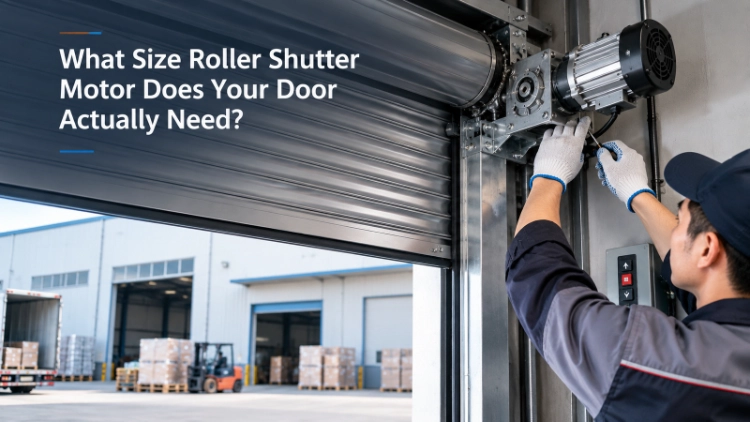
A roller shutter electric motor should not be selected from opening width alone. Two shutters can have the same clear opening but place very different demands on the drive because the curtain material, slat profile, total curtain weight, shaft arrangement, control system, and operating frequency are different. For a commercial or industrial project, the correct question is therefore not “What motor fits a 3 m door?” but “What motor fits this complete shutter assembly and its daily duty?”
That distinction matters during procurement. A motor that is adequate for a light aluminum curtain may be unsuitable for a heavier steel shutter with the same dimensions. A motor that works well for a shop opened twice a day may also be the wrong choice for a warehouse shutter cycling repeatedly through a shift. Good sizing begins with load and duty, then checks power supply, controls, and safety functions.
What Information Determines Roller Shutter Motor Size?
Motor selection starts with the moving part of the door. The clearer the project data, the less likely the supplier is to rely on an assumption that later causes poor performance.
The main inputs are the clear width and height, curtain material, slat profile and thickness, estimated curtain weight, bottom rail, shaft or barrel arrangement, and the expected number of operating cycles. Electrical supply and control method also matter because the operator has to work with the complete control system, not as an isolated component.
Why Is Door Width Alone Not Enough?
Opening size is necessary, but it does not describe the weight that the motor must move. Consider two 3 m x 3 m shutters. One uses a relatively light aluminum curtain. The other uses a heavier steel construction. Both close the same opening, yet the force needed to start, lift, stop, and hold the curtains can be different.
The same issue appears when slat thickness changes. A thicker or reinforced curtain can raise total mass even when width and height stay fixed. Bottom rails, vision sections, locking hardware, and other components can also affect the moving load.
This is why motor size by door width should be treated as an early screening idea rather than a final specification. Width helps identify the scale of the opening. It does not replace the curtain weight, shaft data, or duty requirement.
How Do Curtain Material and Construction Change the Load?
Curtain construction has a direct effect on the load seen by the drive. It also changes the type of motor and control arrangement that may be practical.
Aluminum Curtains
Aluminum is often selected where lower moving weight, corrosion resistance, and quieter operation are important. GUDESEN’s Aluminum Alloy Roller Shutter Door uses high-strength aluminum alloy profiles and a silent AC tubular motor with wireless remote control. Available curtain thicknesses include options from 0.55 to 1.0 mm.
That product configuration illustrates why curtain specification belongs in the motor discussion. Even within an aluminum shutter family, material thickness and total door size can change the moving load. A buyer should therefore provide the actual curtain configuration instead of assuming that every aluminum shutter uses the same operator.
Steel and Stainless Steel Curtains
Steel or stainless steel shutters are commonly chosen where security, surface durability, or site exposure carries more weight in the decision. Depending on the profile and thickness, the curtain may place a higher load on the drive than a lighter aluminum assembly. The motor therefore has to be checked against the completed curtain rather than against material name alone.
Crystal and Transparent Shutters
Crystal shutters add another construction pattern. Transparent polycarbonate sections, connecting elements, and metal components create a different curtain assembly from a conventional solid slat shutter. The visual function may be the reason for selecting the product, but the drive still has to be sized from the completed moving mass and operating duty.
For buyers comparing several shutter types for one project, the sequence is simple: choose the door construction first, then size the operator for that construction.
Why Does Duty Cycle Matter as Much as Weight?
A motor can be mechanically capable of lifting a shutter and still be unsuitable for the way the site intends to use it. Operating frequency changes thermal load, start-stop demand, and the time available for the motor to cool between cycles.
A small retail shutter may open at the start of the day and close at night. A loading or warehouse shutter may operate many times during working hours. The second application demands more from the operator even if the curtain weight is similar.
This is why a commercial roller shutter motor specification should include estimated cycles per hour or per day. The supplier can then review whether the selected drive is intended for that duty rather than checking only whether it can lift the curtain once.
If the project requires truly high-frequency traffic, a conventional security roller shutter may not be the best door type at all. In some cases, a high speed door or hard rapid door is more appropriate because the complete system is designed around frequent cycling. Motor sizing should not be used to force one door category into a duty it was not intended to perform.
What Electrical and Control Details Must Match the Motor?
Mechanical sizing is only part of the specification. The roller shutter electric motor also has to match the available power supply and the required control method.
The buyer should state the site voltage and frequency rather than assume that the factory will provide the correct configuration by default. The project should also identify whether the shutter is operated by wall switch, remote control, access control, or another command system.
GUDESEN’s roller shutter door range includes motorized products with remote-control and switch operation, while some configurations can add infrared or resistance-rebound safety functions. These options affect the control package around the motor and should be defined before production rather than added as an afterthought.
What Happens If the Motor Is Undersized?
An undersized motor may struggle during start-up, run hot, stop under load, or operate inconsistently as conditions change. Repeated thermal protection trips can disrupt access, while excessive strain may shorten the service life of drive components.
Oversizing is not a clean solution either. A larger motor can increase cost and may require different brackets, shaft connections, controls, and electrical arrangements. More power does not correct a poorly balanced curtain or unsuitable guide system.
The target is a drive with enough capacity and suitable duty for the real shutter, with a reasonable engineering margin. That is more useful than choosing the highest available rating.
What Should Buyers Send Before Asking for a Motor Recommendation?
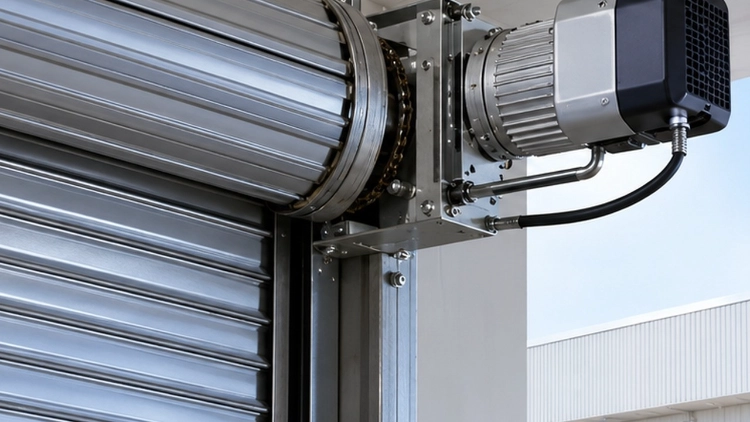
A concise RFQ can make motor selection much more accurate. Start with clear opening width and height. Add the curtain material, slat profile, thickness, and any known curtain weight. If the shutter already exists, provide shaft or barrel information and photographs of the current drive arrangement where possible.
Then state how often the shutter will operate. Give estimated cycles per day and describe any concentrated peak period. Include the local power supply, preferred control method, safety requirements, and whether the installation is internal or exposed to weather.
If the request concerns a replacement motor, add the existing motor nameplate data and explain why it is being replaced. A failed motor on an otherwise sound shutter is a different project from a shutter that has always struggled because the original operator was too small.
A single motor rating should not be applied across every roller shutter type because curtain materials and operating configurations differ. The useful starting point is the exact curtain type and operating duty rather than a generic motor number intended to cover every model.
For buyers focused on budget, How Much Does an Electric Motor for Roller Shutter Door Cost explains the commercial factors behind motor and replacement pricing. Sizing should come first because comparing prices for motors that do not meet the same load and duty requirement gives little value.
Conclusion
The right roller shutter motor size comes from the complete door, not the opening width by itself. Curtain weight, material, shaft arrangement, operating frequency, electrical supply, control method, and safety requirements all affect the final choice. A correct specification therefore begins with project data rather than a generic kW or torque figure.
This approach is especially important for B2B projects, where an operator has to remain reliable after installation and work with the specified controls. The goal is not to select the biggest motor available, but to match the drive to the real shutter and its working conditions.
For a project review, send the opening size, curtain specification, expected cycle rate, power supply, and control requirements before production. Those details provide a sound basis for matching the shutter and motor.
FAQs
Q: Can two roller shutters of the same size use different motors?
A: Yes. Equal width and height do not mean equal moving load. Curtain material, slat thickness, bottom rail, shaft arrangement, and operating frequency can differ, so two same-size shutters may require different operator specifications.
Q: Is a larger roller shutter motor always better?
A: No. The motor should have sufficient capacity and suitable duty, but unnecessary oversizing can increase cost and may require different mounting, shaft, control, or electrical components. A larger motor also does not fix guide friction, poor balance, or alignment problems.
Q: What information is needed to size a roller shutter motor?
A: Provide the clear opening size, curtain material and profile, slat thickness, known curtain weight, shaft details, expected cycles, site power supply, control method, safety requirements, and installation environment. For replacement work, include the existing motor nameplate and current operating problem.