




Roller Shutter Motor Compatibility Before Replacement
The shutter is down, the operator hums, and the warehouse needs the opening back. Ordering another motor with the same power rating looks like the fastest route. It can also create a second repair job. The replacement may have a different shaft connection, fit the bracket poorly, use another limit-setting method, or communicate differently with the existing controller. Roller shutter motor compatibility is a mechanical and electrical question before it becomes a parts order. The useful starting point is the installed door: what it weighs, how it is driven, and which components must continue working after the motor changes.
Why the Door Determines the Replacement Motor
Shutters with identical openings need not use interchangeable motors. Aluminum slats, steel security curtains and transparent shopfront panels carry different loads. Roller diameter, counterbalance where fitted and transmission affect the drive. Width and height alone do not establish output torque or mounting fit.
A motor can turn an empty shaft on a bench and still struggle with the actual curtain. Conversely, a higher-rated replacement is not automatically safer. An unsuitable drive can place excessive force on the shaft, gearing or curtain stops. The correct selection has to reflect the complete assembly, its operating duty and the manufacturer’s approved arrangement.
Before blaming the motor, establish what failed. A damaged curtain can bind in a guide; a worn bearing can overload the drive; and an incorrect limit setting can make a healthy operator appear faulty. The existing article on roller shutter parts and replacement planning addresses component identification. Here the narrower question is whether a proposed roller shutter replacement motor will work with the retained mechanism.
Identify the Drive and Its Mechanical Connections
Start With the Motor Plate and Mounting Layout
A clear photograph of the motor nameplate is worth more than a general description such as “industrial shutter motor.” Record the manufacturer, model, rated supply, output speed, rated torque or lifting capacity if stated, duty rating, and any gearbox or brake identification. Photograph the motor from far enough away to show which side of the opening it occupies and what supports it. A technician should identify the drive family before discussing a substitute.
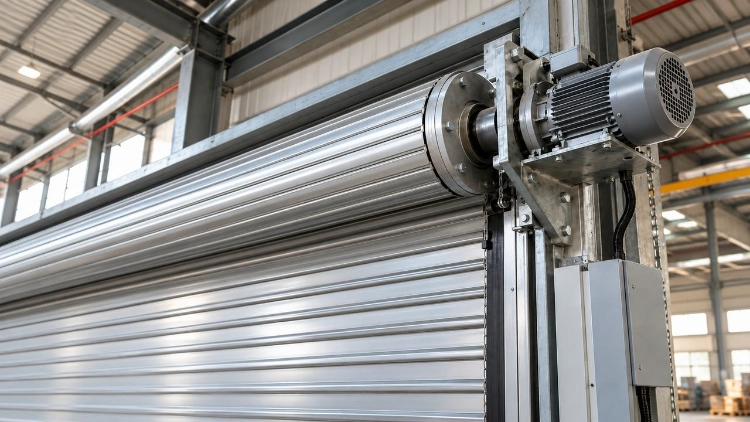
Tubular motors sit inside a compatible roller tube. External or side-mounted operators drive the shaft through a specified coupling, chain or gearbox arrangement. Some installations also have a counterbalance or manual override. These are different replacement jobs, not different sizes of the same motor. The GUDESEN roller shutter range includes electric-operated steel shutters and remote-controlled transparent shutters, illustrating why the existing construction matters to a quotation.
Check the Shaft, Coupling and Supports
The connection at the output end deserves its own measurements. Depending on the system, the technician may need the roller or shaft diameter, keyway or spline details, coupling dimensions, gearbox reduction, sprocket configuration, and mounting-hole pattern. A replacement that lines up with two bolt holes but forces the shaft out of alignment is not a compatible part.
Take photographs of the bracket, shaft end and transmission before anything is removed. Record the free space around the operator, including the wall, shaft cover, adjacent pipework and service access. An upgraded motor may be physically longer. If it collides with the cover or blocks access to the manual release, the installation is unsuitable even when the motor could lift the curtain.
Loose anchors, a distorted plate or an eccentric roller require mechanical repair, not a larger operator. Before dismantling, a technician must secure the curtain and manage stored energy.
Match the Moving Load and Daily Duty
Record measured opening and curtain dimensions, material, slat profile, reinforcing features and operating frequency. A shop shutter that opens twice daily requires a different duty assessment from a delivery entrance cycling every hour.
The motor manufacturer or door engineer must check available torque across the operating travel, the intended speed, braking and thermal duty. If counterbalance components are fitted, their condition changes the effective drive load. Quoting watts alone misses these factors. The motor-cost article deals with pricing; the compatibility decision should be completed before any price comparison is meaningful.
Confirm Electrical and Control Compatibility
Supply Details Cannot Be Inferred From the Motor Shape
Check the existing supply voltage, frequency, phase, rated current and protective arrangement against the proposed motor documentation. A replacement may need a different controller or starter even when its power figure resembles the original. Cable entry locations, connection ratings and available isolating devices also belong on the review drawing.
GUDESEN project information describes manual, electric and remote-control roller-shutter configurations. It also lists different electrical specifications for different door families. Those details should not be merged into a universal shutter-motor voltage. The installed nameplate and confirmed supplier data take precedence over a generic product-category figure.
Limits, Brakes and Safety Inputs Must Still Work
An operator may use mechanical limits, electronic travel settings or a controller-dependent position system. Verify which arrangement the existing shutter uses and how the replacement motor interfaces with it. The upper stop must not drive the curtain into the housing, while the lower stop must allow the specified bottom contact without continuing to push against the floor.
Check the emergency release, brake function, wall controls and remote receivers as separate items. Where the door uses an infrared device or an obstruction-response system, ask the supplier which safety inputs are supported by the proposed controller. A motor’s ability to move the curtain says nothing about its ability to preserve the installed protective functions.
Electrical connection, isolation and commissioning belong to qualified personnel. For US facilities, OSHA’s hazardous-energy-control requirements provide relevant servicing context; local rules and the applicable equipment instructions also govern the job. Do not treat a push button or remote control as an energy-isolating device.
Decide Whether the Motor Is Actually the Failed Part
Consider the symptom before ordering. A drive that stops after several cycles may be responding to thermal protection or high mechanical friction. A shutter that moves unevenly can have guide damage or a shifted roller. If the controller shows a safety-related fault, exchanging the motor will not fix the missing input. Burning smell, damaged cables or unexpected movement call for taking the equipment out of service and arranging professional inspection, not repeated test starts.
A useful maintenance report separates what was observed from what was concluded: “motor energized but shaft did not rotate” is an observation; “motor winding failed” is a diagnosis requiring confirmation. This distinction prevents a motor purchase from becoming an expensive guess.
Send a Motor Compatibility Request That Can Be Checked
A supplier needs enough detail to confirm the existing machine, not just an image of the damaged housing. Prepare one short replacement request with the door identification, clear opening and curtain details; photos of the motor plate, drive connection and supporting bracket; power and control information; approximate daily cycles; and the exact fault symptoms. Attach an image showing the available clearance around the operator.
Ask for a written response to four questions: Is the proposed motor a direct mechanical fit? Does it match the electrical and control arrangement? Which retained components must be replaced or reconfigured? Which safety and emergency functions must be retested? If a new gearbox, coupling or controller is required, it should appear in the scope rather than emerging during installation.
For sites running several shutter types, make the request door-specific. A model that served one opening successfully is not proof of compatibility with another opening in the same building. Record the final approved motor and control identifiers in the maintenance file. It makes the next replacement much less uncertain.
For older doors without drawings, a competent survey may be necessary. GUDESEN provides installation documents, videos and remote guidance.
What to Verify After the Motor Has Been Installed
Commissioning should include several complete opening and closing cycles at normal operating conditions, not only a successful first lift. The technician should check travel limits, curtain tracking, unusual vibration, braking, motor temperature and any abnormal noise. Controls must respond as specified, and the manual or emergency-release arrangement should be demonstrated using the manufacturer’s approved procedure.
Retest every installed protection device in the positions that matter for the site. Where a shutter carries people and vehicles through the same opening, operating staff should know which devices command opening and which prevent unsafe closing. Record the new motor number, controller settings and commissioning outcome. Without that record, the next service team has to rediscover the same configuration.
For a replacement assessment, send GUDESEN the existing motor photographs and door measurements. A request supported by specific dimensions and controller details is easier to assess than a motor photograph alone.
Conclusion
Roller shutter motor compatibility is established at the connections: shaft, mounting, load, power, travel control and safety system. A similar-looking operator may be a poor replacement, while a carefully matched motor may allow the existing curtain and structure to remain in service. Start with the installed configuration, ask the supplier to identify any associated components, and make commissioning part of the replacement order. Price is a later question, once the technical match is credible.
FAQs
Q1: Can I replace a roller shutter motor without changing the controller?
Sometimes. It depends on the motor’s supply, limit-control method, brake arrangement and the controller’s supported outputs and safety inputs. A same-brand motor is not automatically a direct substitute across product generations. Request written confirmation against both model numbers.
Q2: What motor details should I photograph before ordering a replacement?
Capture the complete nameplate, motor location, shaft connection, gearbox or chain drive, mounting bracket, control cabinet identification and cable entry area. Add a wider photograph showing the shutter opening and usable maintenance space. Take these images without removing guards or entering a hazardous area.
Q3: Can a higher-torque motor be installed on an existing shutter?
Only after a competent review of the curtain, shaft, gearing, counterbalance where applicable, stopping system and permitted loads. Greater torque does not correct binding guides or worn bearings, and it can transfer more force into components that were designed for the original drive.