




How Do Power Outages Affect Retractable Sliding Security Gates?
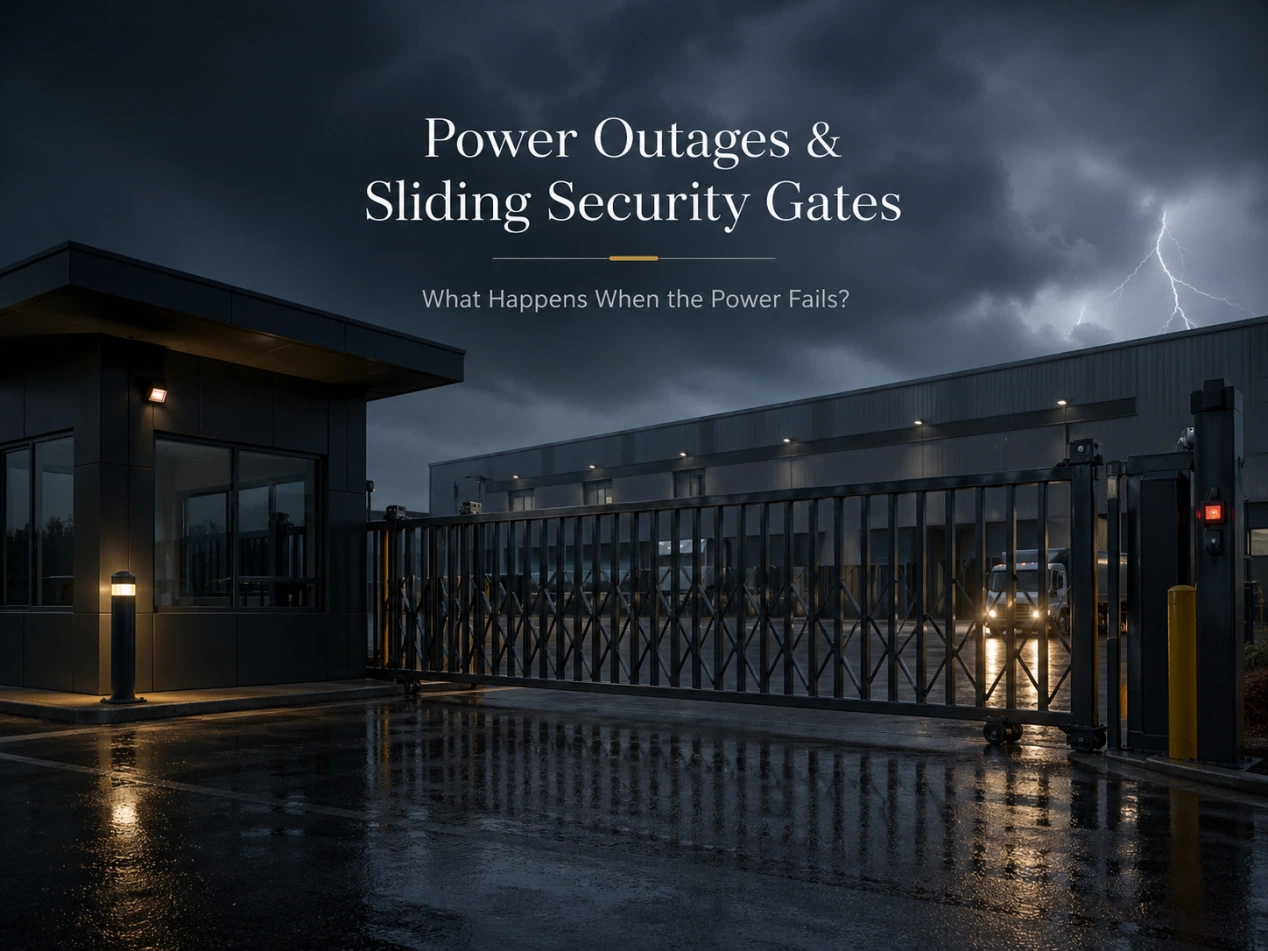
A heavy summer thunderstorm rolls through your city. Lightning flashes, thunder cracks, and suddenly, the entire industrial park goes completely dark. The evening shift just ended, and dozens of transport trucks are lined up, ready to hit the highway. But there is a major problem. Your massive metal entrance barrier is frozen shut. A sudden grid failure brings business to a grinding halt. Facility managers face this exact nightmare every year when severe weather or aging city grids fail. What actually happens to your heavy-duty entrance when the electricity stops flowing? Are your goods trapped inside, or worse, is your property left wide open to intruders? Dealing with an unexpected blackout does not have to cause panic. Let us look closely at the mechanical reality of these systems and figure out exactly how to keep your traffic moving when the lights go out.
The Immediate Impact of a Blackout on Your Main Barrier
When the local grid drops, the first thing people ask is whether the property is safe or totally exposed. The answer comes down to the physical hardware inside your motor box. Let us pull back the metal cover and look at what happens inside.
Motor Shutdown and Internal Locking Mechanisms
The moment the electricity cuts off, the heavy-duty motor driving your entrance barrier instantly powers down. Most high-quality industrial systems run on a 220V/50Hz power supply. When that voltage disappears, the internal gears stop moving. However, the barrier does not just roll open freely. Because these motors use a specific worm gear and reducer design, the mechanical parts naturally lock into place. This means that a standard power failure gate stays firmly stuck in whatever position it was in when the lights went out. If it was closed, it stays closed. The heavy metal frame cannot be pushed open by hand just because the electricity is gone. This mechanical locking feature is a deliberate design choice to stop intruders from cutting the power lines to break into a warehouse or factory.
Security Risks During a Total Grid Failure
Because the gears lock up automatically, your facility remains completely secure during a gate power outage. Thieves cannot simply slide the heavy metal folds apart. The true risk during a blackout is not someone getting in, but rather your own staff and vehicles getting trapped inside. If a fire or medical emergency happens at the exact same time the grid fails, a stuck barrier turns into a serious safety hazard. You need a fast way to override the locked motor so emergency vehicles can pass through. This is why facility managers must know the physical mechanics of their entrance systems. You cannot rely on electronic key cards, remote controls, or geomagnetic sensors when the main circuit board is totally dead.
Primary Solutions for Sudden Electrical Failures
You definitely do not have time to sit around and wait for the utility company to fix the broken power lines. Modern industrial barriers are built with clever mechanical workarounds to keep your daily operations running. Here are the main ways to beat the blackout.
Operating with a Dedicated Manual Clutch
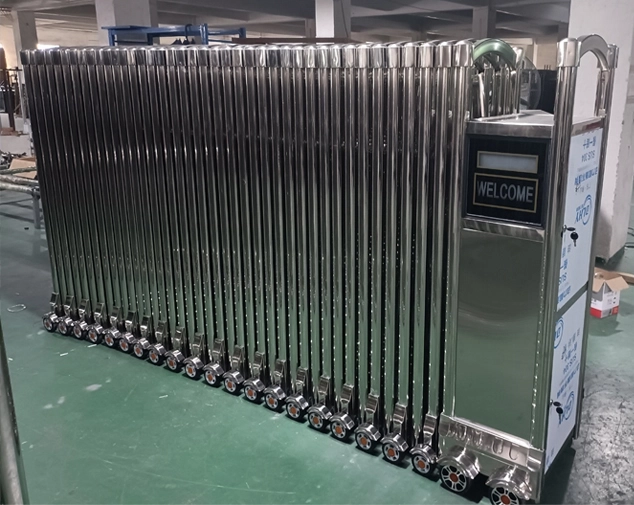
The most common and reliable fallback option is the manual release gate mechanism. Inside the stainless steel housing of the motor, there is a specialized physical clutch. When the gears are locked up due to a lack of electricity, this clutch acts as a bridge between the motor and the moving tracks. By using a customized physical key—usually shaped like a hexagon or a specific metal prong—you can manually disengage the gears. Turning this key separates the drive system from the toothed rack on the ground. Once separated, the heavy metal frame is free to roll on its wheels. Even though a large industrial barrier might weigh hundreds of kilograms, a single security guard can usually push it open by hand. This is because the wheels sit on a smooth track, reducing the friction almost entirely.
Activating Built-in Battery Systems
If you want to avoid pushing heavy metal entirely, you can upgrade your system with gate backup power. Many control boxes have enough extra space inside to hold a secondary battery system, commonly a DC24V 7AH setup. When the main 220V city power drops, the control board instantly switches over to these backup batteries. This means your remote controls, keypad access, and infrared safety sensors keep working like normal. The sliding gate power remains strong enough to open and close the barrier for a limited number of cycles—usually between ten and twenty full trips, depending on the weight of the metal and the condition of the batteries. Having this battery reserve is highly recommended for busy logistics parks where stopping traffic to use a manual key would cause a massive traffic jam.
Steps to Open Your Barrier Without Electricity
Having the right emergency tools is great, but your security staff actually needs to know how to use them in the dark. It helps to practice this routine before a real storm hits. Follow these exact steps to open your entrance quickly and safely.
Locate the Override Key: Keep the specific emergency gate release key in a safe, known location inside the guardhouse. Do not lose this key, as a standard screwdriver will not fit the mechanism.
Find the Clutch Hole: Walk up to the motor housing. You will usually find a small rubber plug or a metal flap on the side of the 0.8mm thick stainless steel box. Remove it to reveal the clutch hole.
Turn to Disengage: Insert the key and turn it firmly. You will physically feel the gears pop apart. This puts the system into security gate manual mode.
Push the Frame: Grab the vertical metal poles and push the barrier smoothly along its 1.2mm thick stainless steel guide rail. Do not force it if you feel extreme resistance; check if the clutch is fully turned.
Re-engage After Power Returns: When the city grid comes back online, you must insert the key again and turn it in the opposite direction. If you forget this step, the motor will spin, but the barrier will not move.
Choosing Reliable Hardware for Your Facility
Dealing with blackouts is much easier when you buy the right equipment from the very beginning. A cheap motor will leave you stranded in the rain, while a well-built machine offers smooth emergency features. Let us talk about what specifications actually matter.
Motor Capacity and Heavy Weight Loads
The strength of the motor dictates how well the barrier handles both normal days and emergencies. Brands like GUDESEN offer different motor classes, such as the 120 type, 150 type, and the heavy-duty 500 type. A heavy motor is necessary to pull thick stainless steel frames, with load-bearing capacities reaching up to 250 kilograms per door leaf. If you buy a motor that is too weak for your specific entrance size, the internal gears will grind down quickly. When a blackout finally happens, a worn-out gearbox might jam completely, making it impossible to even use the emergency release key. Picking the right motor power from day one keeps the internal parts fresh and ready to disengage smoothly when you really need them to.
Why Raw Material Quality Matters in a Crisis
When you are forced to push a massive barrier by hand, the quality of the raw materials becomes very obvious. High-end security retractable sliding automatic main gates are built using premium 201# or 304# stainless steel. This material resists rust, corrosion, and bending over time. If a factory uses cheap metal, the tracks will rust and warp after a few years of rain and snow. Pushing a rusted frame by hand during a blackout is exhausting and sometimes impossible. The wheels simply get stuck in the damaged tracks. By investing in a thick, 1.2mm stainless steel rail system, you keep the friction low. Your security guards will easily be able to slide the heavy metal open during a storm, keeping your trucks moving and your business running on time.
A sudden electrical blackout does not have to paralyze your warehouse or factory. By understanding how the internal gears lock, keeping your manual release keys handy, and investing in solid battery backups, you can keep your traffic flowing smoothly through the worst storms. The secret lies in picking high-quality hardware that resists rust and features reliable motor clutches. If you are tired of struggling with old, jammed barriers every time the grid fails, it is time to upgrade to a system built for real industrial challenges. GUDESEN manufactures heavy-duty, weather-resistant entrance systems designed to handle both daily heavy traffic and unexpected emergencies. Contact us today to find the perfect sliding barrier for your facility.
FAQs
Q: What should I do during a gate power outage?
A: Use the manual release gate key to disengage the motor and push the barrier open by hand.
Q: Does a power failure gate lose its security?
A: No, gears stay locked until you activate the emergency gate release with a specific physical key.
Q: Can I add gate backup power later?
A: Yes, most systems allow you to install a 24V battery to maintain sliding gate power during blackouts.