




Flexible Lift Door vs Steel Hangar Door: Which is Best for Your Plant?
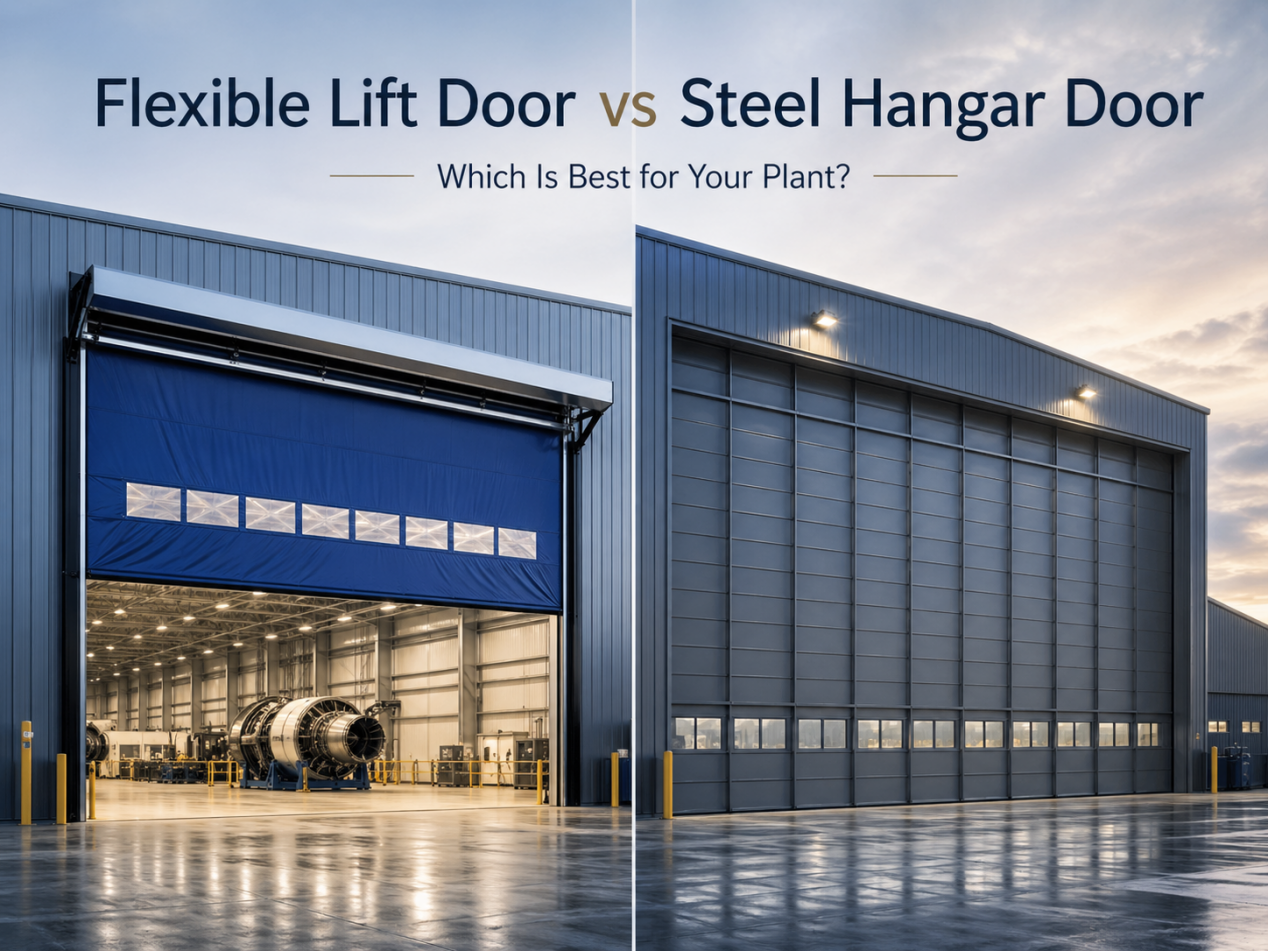 Have you seen the recent news about private space companies building massive new rockets? Or maybe you have driven past a coastal shipyard putting together a giant cargo vessel. These massive industrial projects all share one major physical requirement: they need buildings with absolutely enormous doorways. For many decades, the standard answer to covering a giant hole in a factory wall was to install a heavy metal barricade that rolls on floor tracks. But today, facility managers and building contractors have a much lighter, smarter option to consider. Deciding between a traditional steel model and a modern fabric barrier is a huge financial choice that impacts the entire building design. Let us break down the physical differences, the hidden construction costs, and the daily safety features of these two systems, so you can make the best choice for your next large-scale building project.
Evaluating Weight and Building Structural Costs
When planning a giant entrance for a new aircraft facility or a busy shipyard, the first big hurdle engineers face is the sheer weight of the physical barrier itself. This single factor changes the entire architectural blueprint and heavily impacts the budget needed for the roof support beams.
The Heavy Burden of Metal Panels
Steel is incredibly strong, but it is also incredibly heavy. When you build an entrance that is 30 or 40 meters wide using solid metal plates, the dead weight of the material adds up to dozens of tons. To hold that massive amount of weight without collapsing, the building’s top frame and side walls must be heavily reinforced with expensive, high-strength structural steel. You end up spending a large part of your construction budget just buying extra steel beams to support the heavy metal panels. Furthermore, heavy steel doors put a massive strain on the electric motors that pull them open, leading to higher electricity bills and faster mechanical wear over the years.
The Lightweight Fabric Alternative
On the other side of the debate, a flexible lift door takes a completely different approach to large-scale openings. Compared to any other type of entrance with the same dimensions, this style offers the lightest possible weight. Because the main material is fabric rather than thick metal, it puts far less stress on the top beams of your building. This means your architects can design a lighter, more cost-effective roof structure. You save a massive amount of money on raw construction materials before the building is even finished. It makes the entire engineering process much simpler for extra-large factories.
Managing Floor Space Inside the Building
Floor space inside a manufacturing plant costs a massive amount of money to build, heat, and maintain year after year. Traditional sliding metal systems often force facility managers to leave huge empty wall sections just to park the giant panels when they slide open during the day.
Instead of sliding to the side, modern fabric solutions use a clever vertical motion. Let’s look at exactly how different designs impact your valuable indoor working area.
The Wasted Space of Sliding Doors: A traditional steel hangar door usually runs on bottom tracks and slides left or right. If you have a 30-meter opening, you need almost 30 meters of blank, empty wall space beside the opening for the doors to hide when they are fully open. You cannot put machines, storage racks, or workbenches near that wall area.
The Upward Stacking Method: A stacked hangar door completely solves this wasted space problem. It is installed directly inside the hole and operates with a straight upward motion. When the motor turns on, the bottom beam rises and the fabric folds up neatly, stacking perfectly at the top of the ceiling. It stays square and takes up zero indoor working space.
Dividing Massive Spans: If you are building a super large hangar door, say 60 meters wide, making a single door is very difficult. Modern fabric systems solve this by using movable guide rails. These rails drop down from the ceiling to divide the giant opening into several independent sections. When you close the facility, the guide rails lock into the ground, and several smaller fabric panels drop down. This cuts down the overall thickness of the door and makes the layout incredibly reasonable.
Handling Extreme Weather and High Wind Pressure
Facilities built near the coast face brutal storms and powerful hurricane winds every single season. You might naturally assume that only thick solid metal panels can successfully block a massive storm, but modern fabric engineering offers surprisingly tough alternatives that actually perform better under extreme weather conditions.
Rigid Steel in Bad Weather
Metal panels do block wind, but they face other weather-related problems. Steel rusts when exposed to salty ocean air or constant rain over many years. You have to paint them regularly and treat them with anti-corrosion chemicals. Also, a giant flat sheet of steel acts like a massive sail. When a strong gust of wind hits a solid metal panel, the rigid impact transfers shaking energy directly into the building’s walls and tracks, which can cause structural damage over time.
The Windproof Skeleton Design
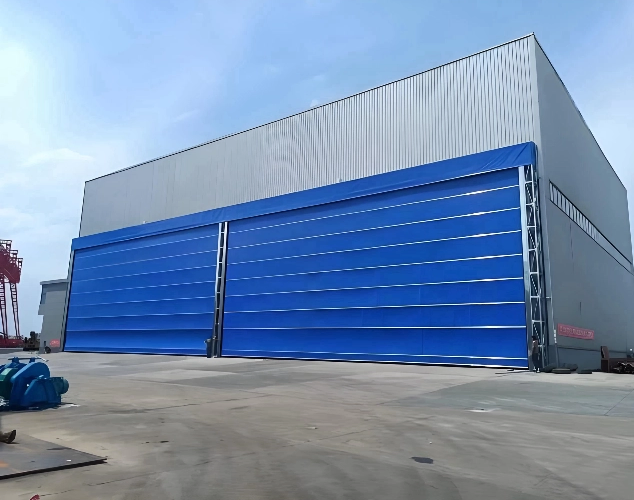
A flexible hangar door might sound weak because it uses fabric, but the inside structure is incredibly strong. The barrier actually consists of two layers of extremely high-tensile polyester cloth. In between these two layers, manufacturers place thick aluminum beams horizontally to act as a windproof skeleton. By simply adjusting how thick these aluminum beams are, and how closely they are spaced together, this fabric system can successfully resist almost any strength of wind pressure.
Beyond just blocking the wind, the outer cloth features an ethylene coating. This special chemical layer makes the barrier 100% waterproof, flame-retardant, and highly resistant to sun damage. For heavy industry workers, the double-layer cloth provides an unexpected bonus: it can actually absorb sound and reduce loud machinery noise passing outside. It also provides heat preservation and prevents mildew from growing in damp environments.
Daily Safety for Workers and Heavy Equipment
Moving a giant barrier that weighs several tons creates serious safety risks for the mechanics and expensive vehicles passing underneath it daily. A simple wire failure can easily lead to a disastrous dropping accident if the proper physical safety catches and modern electronic sensors are not actively in place.
When you manage a busy rocket assembly plant or an active flight line, safety is the top priority. Heavy doors dropping on expensive aircraft parts can cost millions of dollars in damages. Here is how modern systems prevent disasters:
Anti-Breaking Locks: Giant doors are pulled up by thick steel wire ropes. If a wire rope snaps on an old system, the door crashes to the floor. A modern vertical lift door features special mechanical anti-breaking locks. If the system detects a broken wire, physical brakes instantly grab the side rails, stopping the entire curtain from falling at any point on the track.
Movable Rail Protection: The movable rails that drop from the ceiling also have their own fall arrest devices. These safety catches make sure the heavy aluminum rails park securely at the top of the ceiling without ever dropping unexpectedly on a worker’s head.
Bottom Rebound Airbags: The most common accidents happen when a door closes on a truck or a forklift. A quality soft curtain door is equipped with sensitive airbags running along the entire bottom edge. If the descending edge touches any object—even lightly—it immediately bounces back up to the ceiling, keeping people and property totally safe.
Making the Final Decision for Your Facility
Comparing a classic heavy metal entrance to a modern fabric model really comes down to your specific daily operations, your local climate challenges, and your initial construction budget. Both styles serve distinct purposes, but one clearly offers much more structural adaptability for building complex modern factories.
A solid metal entrance still works fine for smaller, basic warehouses where you just need simple security and do not open the building very often. But the industrial world is moving toward bigger, faster, and smarter facilities. If you run a high-tech facility, a heavy metal slab dragging across the floor simply slows you down and costs too much to install.
For projects involving ultra-high openings—like rocket assembly buildings, commercial aircraft hangars, or heavy machinery depots—the fabric option wins easily. You can explore a highly durable aviation flexible access door to see exactly how these lightweight, wind-resistant systems operate in the real world. They save your company huge amounts of money on building materials, they fold up tightly to save floor space, and they pack enough safety features to protect your most valuable workers and equipment.
Conclusion
Choosing the right massive entrance is a major architectural decision that affects your daily workflow and your long-term maintenance budgets. While standard metal panels provide basic physical security, they often create headaches regarding weight, wasted wall space, and rust. Switching to a flexible lift door solves these problems instantly. You get a lightweight system that resists hurricane winds, saves expensive structural steel, and stacks neatly out of the way. If you want to stop wasting floor space and upgrade your facility’s safety, it is time to look at modern fabric solutions. Contact GUDESEN today! We are ready to help you plan and build the perfect custom entrance for your massive industrial project.
FAQs
Q: Which door is better for very wide building openings?
A: A flexible lift door is better because it uses movable guide rails to divide extremely wide spaces safely.
Q: Can a soft curtain door survive strong coastal winds?
A: Yes. It uses strong aluminum beams hidden inside double-layer fabric to safely block intense hurricane-level wind pressure.
Q: Is a steel hangar door heavier than a fabric door?
A: Yes, steel is much heavier, which forces building contractors to spend extra money buying stronger roof support beams.