




Cold Storage Door Upgrades: Why Are You Still Bleeding Frozen Air?
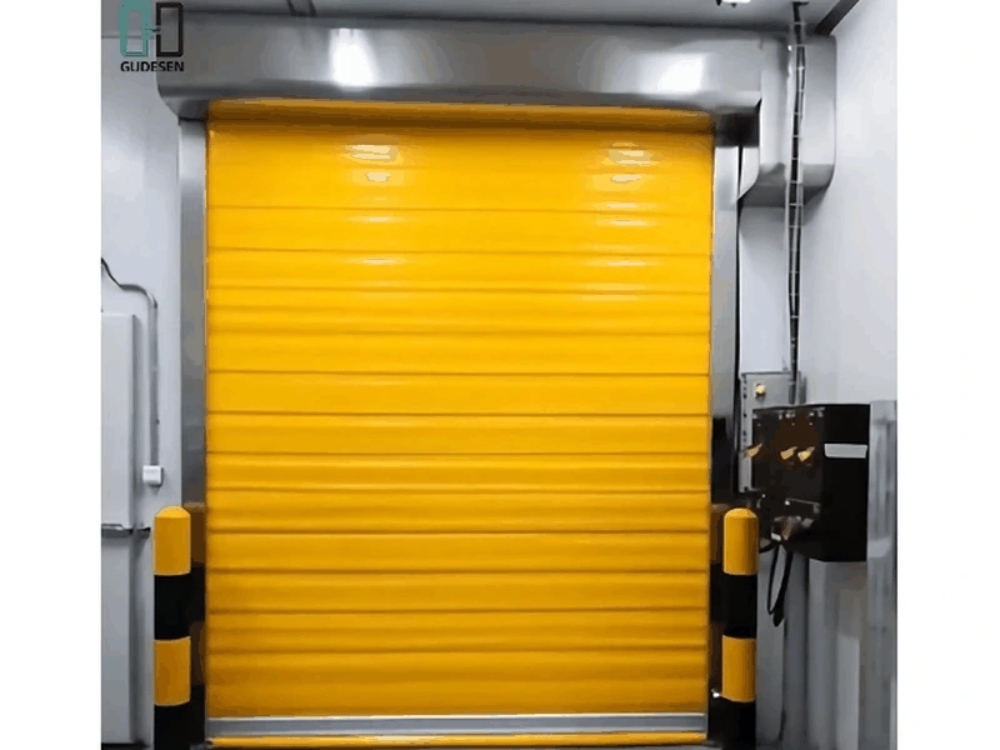
Managing a sub-zero logistics center is a constant battle against thermodynamics. It is not just about cold air escaping; it is about the physics of air infiltration. Every time a traditional sliding door opens, the temperature and pressure differential acts like a vacuum. It pulls warm, moisture-heavy ambient air into your deep-freeze zones. This thermal exchange does two things: it forces your compressors to run continuously at peak load, and it causes the incoming humidity to flash-freeze onto your evaporators and concrete floors. You are burning electricity just to freeze outside moisture. To stop this, you need an engineered thermal shield that minimizes exposure time and halts convective heat transfer. Upgrading your entrance is an engineering requirement to stabilize your climate and protect your operating budget.
Why Does a Thin Thermal Barrier Instantly Kill Your Compressors?
Thermodynamics is an unforgiving science. A thin sheet of metal offers zero resistance against heat transfer. While facility managers often obsess over motor speeds, ignoring panel thickness is like blasting your winter heater with the front door wide open. Your equipment simply burns out.
Blocking Heat Transfer with an 8mm Dual-Layer Core
Heat seeks the path of least resistance. It bleeds through weak materials and destroys your isolated climates. We stop this by engineering a soft curtain out of an 8mm dual-layer PVC built around a dense Expanded Polyethylene (EPE) thermal insulation core. A high r-value freezer door forms a physical block that fights back against ambient temperatures ranging from -18°C up to +70°C.
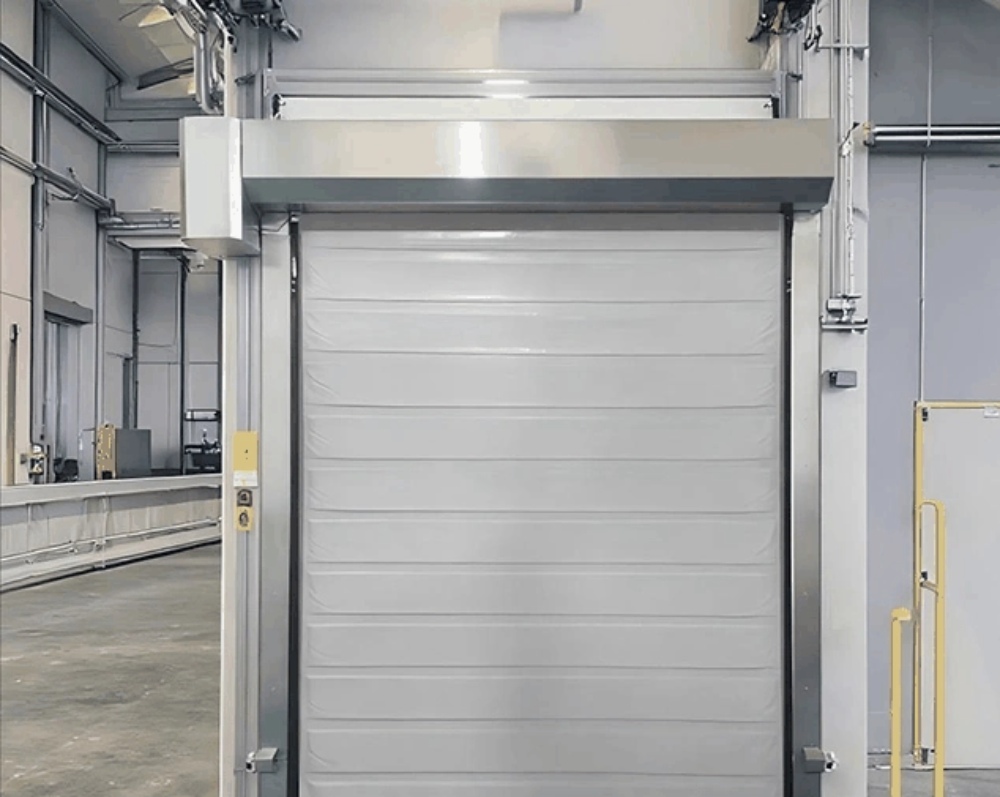
This dense EPE insulation traps the deep freeze inside your storage zone. It leaves no hollow air pockets for thermal bridging to occur. When you fortify the opening with this material, your cooling system catches a break. The compressors stop running non-stop. They cycle down. Your monthly energy bills drop. Period. You regain control over your facility’s power consumption.
Eliminating Lethal Floor Ice and Condensation
Poor insulation creates a dangerous workspace. When warm, humid air crashes into an uninsulated freezing surface, it liquefies. Those water droplets cascade down to your loading dock and freeze. You get black ice. Your heavy forklifts lose traction. Your workers slip.
Installing a high r-value freezer door stops this thermal clash. The thick 8mm core ensures the panel’s warm side stays close to ambient room temperature. Condensation never forms. Your concrete floors remain dry, shift after shift. You eliminate the slipping hazards. You pass your safety audits without the fear of ice-related workplace injuries.
Can Opening Speed Actually Compensate for Extreme Temperature Drops?
Even a thick insulated wall becomes useless if it takes ten seconds to roll up. In high-frequency logistics, the time your threshold remains exposed dictates your climate stability. You must balance thermal resistance with fast mechanics to slam the barrier shut before the cold escapes.
Slashing Exposure Time with 1.5m/s Rapid Cycles
Every second counts when you move goods in and out of a blast freezer. A traditional sliding panel creates a logistical bottleneck. We replace that movement with an insulated rapid roll door that fires open at adjustable speeds up to 1.5 meters per second (5.25 ft/s), driven by a heavy-duty 220V servo motor.
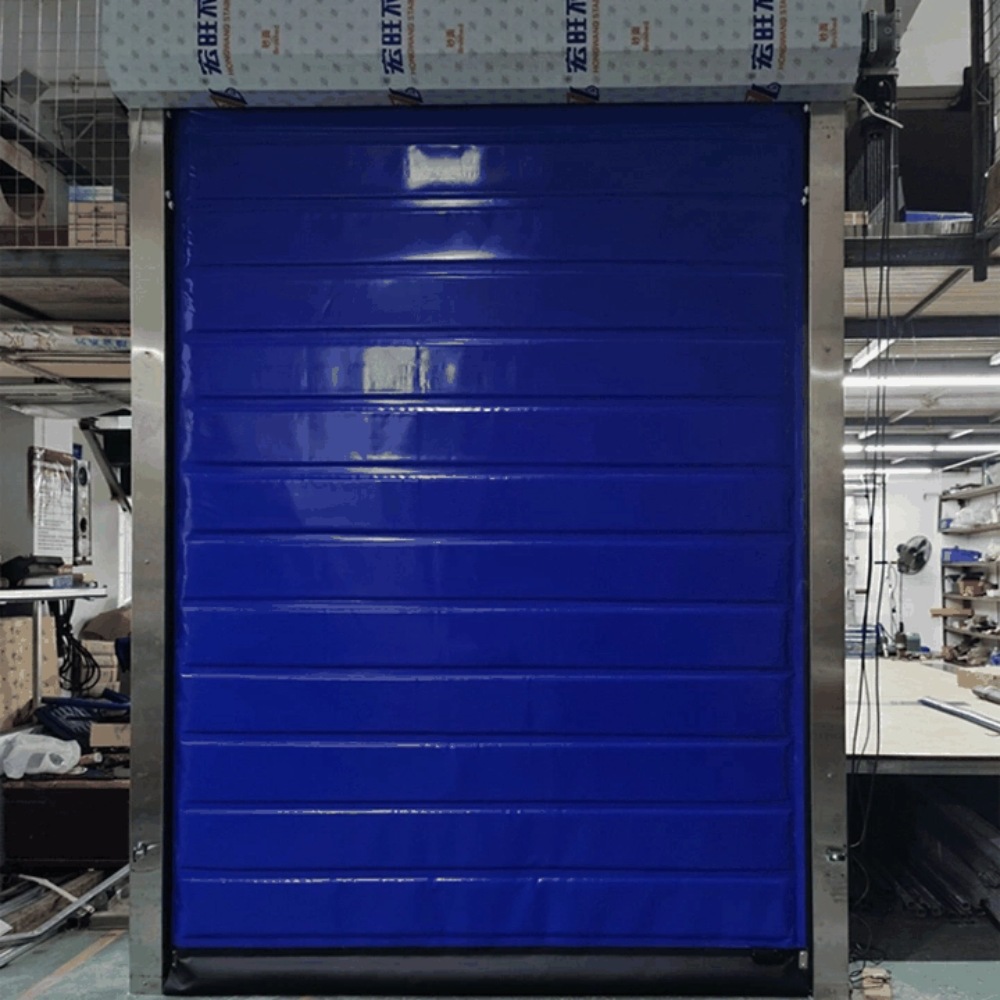
This speed slashes your exposure time to fractions of a second. A forklift approaches, the radar triggers the PLC control system, and the barrier vanishes before the driver touches the brakes. The door cycles so fast that the internal freezing climate barely registers the breach. You trap the cold air inside. You keep the supply chain moving without sacrificing your environmental seal.
Securing Compliance During Heavy Traffic
Food safety auditors and clinical inspectors hunt for temperature spikes in your digital logs. If your entrance stalls in a biological sample bank or a semiconductor testing workshop, your internal climate fluctuates, and you fail the inspection. An insulated rapid roll door handles hundreds of daily cycles without overheating or jamming.
We loaded this unit with protection. A photoelectric safety eye and a flexible bottom edge safety airbag trigger a reversal upon any physical contact. You secure your certifications. Efficiency transforms from a buzzword into your compliance weapon.
How Do You Stop Your Guide Tracks from Freezing Solid at -18°C?
The biggest vulnerability in blast freezers is not the fabric; it is the hardware. Moisture from the ambient zone attacks sub-zero tracks. Without active intervention, that moisture turns into ice, jamming the gears and bringing your shipping schedule to a halt.
Melting Frost with Side-Mounted Heating Wires
You cannot operate a frozen track. Drivers cannot wait for maintenance crews to arrive with heat guns and hammers. An anti-freeze industrial door stops the ice. We build an anti-icing system featuring low-voltage heating wires directly into the side-mounted guide rails.
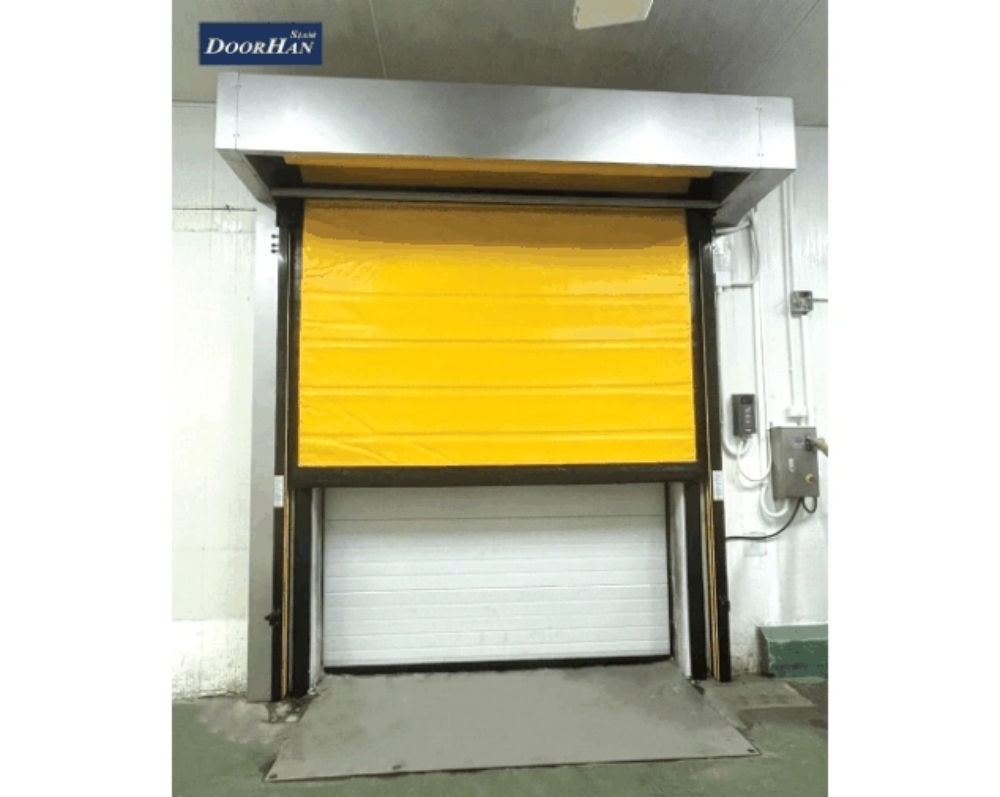
This localized heat system melts frost upon contact. The tracks stay clear of ice buildup. Your motor pushes the heavy curtain up and down without fighting resistance. The system operates with the same fluid motion at -18°C as it does during a summer shift. You keep the traffic flowing.
Upgrading the Control System for Corrosive Environments
Standard electronics short circuit when mixed with condensation and cold-chain environments. An anti-freeze industrial door relies on an IP54-rated control box that seals the internal circuit boards away from moisture.
You avoid the electrical failures that destroy lesser frames. The user-friendly Programmable Logic Controller (PLC) allows for customizable operation cycles and provides diagnostic error codes. Investing in the right electronics simplifies troubleshooting and slashes your repair budgets. You build a facility that survives harsh conditions.
What Makes a POM Steel Zipper Superior for Sub-Zero Vacuum Sealing?
Slapping rubber flaps on the edges of a rolling curtain guarantees disaster. The pressure difference between a warm warehouse and a blast freezer creates a vacuum that pulls air through any gap. You need a continuous lock to stop the chimney effect.
Severing the Thermal Bridge with Double EPDM Strips
Standard brush seals conduct heat and degrade. If your door frame leaves gaps between the warm room and the deep freezer, it pulls heat inside the cold zone. A zipper cold room door separates these two environments using a combination of a POM steel zipper and double EPDM sealing strips.
This engineering severs the thermal bridge. The three-layer sealing effect is remarkable. The metal stops sweating. It stops freezing. By isolating the framework, you ensure that every watt of your cooling energy stays inside the room where it belongs. You stop fighting the laws of physics.
Locking the Perimeter to Stop the Chimney Effect
Drafts destroy budgets. A zipper cold room door eliminates the leaks common in standard warehouse doors. We integrate the continuous POM zipper mechanism right to the curtain edges, locking it inside the aluminum or polymer guide rails. We even add a bottom cloth pocket to seal uneven floors.
This design withstands indoor pressure drops up to 5000mm wide by 5000mm high. You lock the air inside. You transform your opening into a high-performance climate barrier.
Conclusion
Securing a deep-freeze environment demands physical barriers. Relying on slow, uninsulated metal panels means you bleed operating capital on wasted electricity and frequent ice-related accidents. By installing a cold storage high speed door, you lock the frozen air where it belongs. These systems slash your compressor workloads, ensure hygiene compliance, and prevent floor condensation. Stop letting bad hardware dictate your logistics efficiency. Contact GUDESEN today. Our engineering team will help you configure a custom cold storage high speed door that withstands sub-zero environments and keeps your supply chain moving without interruption.
FAQs
Q1: Will heavy forklift impacts destroy the insulated door panels?
A1: No. We engineer the cold storage high speed door to survive hits. The flexible edges pop out to absorb the crash and reset automatically without needing manual repairs.
Q2: How much energy does an active anti-icing heating system consume?
A2: It uses minimal power. The side-mounted heating wires only warm the guide tracks on your zipper cold room door, saving you energy by preventing motor burnouts and ice jams.
Q3: Can these flexible doors handle heavy traffic in pharmaceutical environments?
A3: Yes. The 220V servo motor handles high-frequency cycles, while the photoelectric safety eye prevents contact, making it perfect for insulin storage and biological sample banks.