




Is Anti-Scratch Glass for Retail Automatic Doors Worth Specifying?
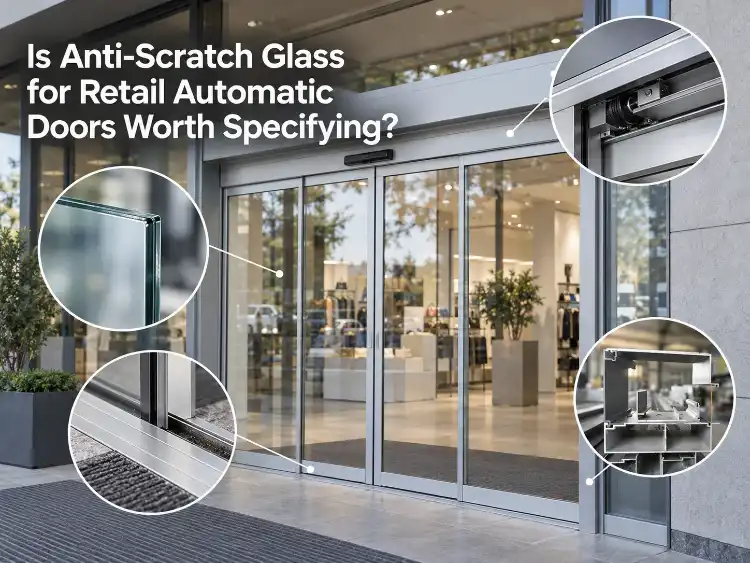
Is anti-scratch glass for retail automatic doors worth specifying? Usually the honest answer is that the glazing is not the part of the entrance that fails first. A storefront leaf goes dull because a cage has clipped it on the way out of the loading door, because the same grit has been sitting in the threshold for a fortnight, or because a cloth that was used on the floor was used on the glass next.
Sorting those causes from the glass itself is what makes the difference. Two of them can be designed out before the door arrives. The third is a store routine. Once the causes are separated, deciding whether an anti scratch glass leaf, a different cleaning method or a change at the opening is the right answer becomes much simpler.
What Actually Scratches a Retail Automatic Glass Door
Surface damage on an entrance leaf rarely comes from one incident. It accumulates, and the pattern of the marks on the glass usually points to which of the three mechanisms is doing the work on that door.
Trolleys, Cages, Deliveries and Cleaning
Anything with a metal edge that passes the same point of the leaf every day will eventually leave a mark. Cages and roll containers are the worst offenders because their frames are already chipped and rough. Deliveries add another contact point when goods are manoeuvred through a partly open door instead of a fully open one.
Cleaning belongs in this list too, which surprises most store teams. A cloth or pad that has picked up grit from the floor, or a scraper used on stickers and labels, removes more surface than it clears. The leaf then looks hazy in exactly the area the staff clean most often.
Grit at the Threshold and in the Track
The second mechanism is quieter and it works from the bottom of the leaf. Sand, small stones and broken glass collect at the threshold during weather and street cleaning, and once material is held there it sits against the travelling edge of the glass. A sliding leaf then drags abrasive material across its own surface every time it opens.
Keeping that material away from the glass is an opening problem rather than a glass problem, which is why it belongs in the specification and in the daily sweep.
What the Glazing Already Gives You
Before adding anything to the specification it is worth being precise about what the standard glazing already does, because the automatic sliding glass door most stores already operate is better built than the damage suggests.
Why Automatic Doors Use Tempered Glass
Automatic glass doors typically use 12 mm tempered single-layer glass, and the glass must be tempered. Tempering gives the leaf high hardness, and the practical benefit is safety: when tempered glass does fail, it does not leave sharp shards that injure people.
That hardness is what buyers mistake for scratch resistance. Tempered glass is chosen for the way it breaks, not for a surface treatment: it does not leave sharp pieces that injure people, but it does not stop hard mineral grit from marking the glass, and it does not make the door leaf immune to a steel cage frame.
Single-Layer or Laminated Glass
A complete automatic glass door is a system rather than a pane: 12 mm tempered glass, a steel beam, the door machine, a door clamp and a stainless steel cover head. Laminated and other glass types appear elsewhere in the product range, and where a project genuinely needs a different build it is specified as such rather than assumed.
The build matters because it sets the weight, and the weight has to be carried. At 12 mm, tempered glass is calculated at about 30 kg per square metre, so a wide retail leaf is a substantial moving mass. A drive that is undersized for it can hesitate or creep, and a leaf that moves unevenly is a leaf that meets the track at an angle.
Where Damage Is Prevented at the Opening
Most of the glass door protection available to a retail entrance sits in the opening rather than in the glass. The guide rail, the track and the stainless steel framing around the opening are what a store can actually change.
Track, Threshold and Guide Clearance
The threshold is where abrasive material collects, so the detail that matters is whether grit is pushed clear of the travelling edge or trapped against it. Guide clearance and the condition of the track decide whether the leaf runs freely or drags. On aluminium profile assemblies the guide rail carries sealing strips on both sides, described as waterproof and dustproof for the running gear of the door, and keeping those strips intact is what stops the track becoming a grit trap for the glass.
Leading Edge, Sides and Framing
The parts of the opening that traffic actually touches can be reinforced. Stainless steel framing and stainless steel glass edging are documented options around the opening, and both take contact that would otherwise reach the glass edge. On a store entrance the leaf itself is usually an automatic sensor glass door for retail use, so the framing detail and the leaf are specified together. Safety photoelectric protection and an access control system are also specified here, because detection decides whether the leaf is still moving when someone pushes a trolley through.
Choosing those options is a discussion with the door supplier rather than a separate purchase, since the detection and control components sit around the same opening as the framing.
Specifying for Retail Traffic
Retail entrances are specified by duty, not by shop type. A convenience store with steady footfall and one delivery a day asks less of a leaf than a supermarket where cages cross the threshold every hour, so the automatic sliding glass door at each entrance is a different specification even when the two openings look alike. The questions that separate them are the width of the leaf, the weight that width produces, the number of movements per day and the direction of approach.
Leaf weight is the figure most often left out. Documented motor options are rated from 70 kg per leaf to 250 kg per leaf depending on the model, and the glass sliding door motor is built to move heavy leaves quietly and smoothly. What a specification has to do is put the right model against the actual leaf rather than the generic one, and that calculation is worth doing with the supplier before the entrance is ordered.
It is also worth saying plainly what a scratch resistant glass product is and is not. Where the damage is coming from grit in the track, a treated leaf still meets the same grit. The weight of the leaf sets the drive, so sizing the operator for a heavy glass leaf belongs in the same conversation. Standard tempered glass with a surface treatment is sold as scratch resistant glass or as anti scratch glass, and the treatment changes how the surface behaves under daily contact; it does not turn the leaf into a wear part that cannot be marked. Where the damage is coming from grit in the track, a treated leaf still meets the same grit.
Cleaning Without Dulling the Glass
The cleaning method is the cheapest cause to remove and the one stores control least consistently. Three rules cover most of it. Keep floor cloths and glass cloths separate. Rinse the glass before wiping it, so grit is lifted rather than pushed across the surface. And use the cleaning agents the glazing was supplied for, because an aggressive product used repeatedly will haze a leaf that no trolley ever touched.
A short written routine at the door is more useful than a general instruction, because the person cleaning the glass at seven in the morning is rarely the person who specified the door. The threshold and the approach belong in that routine too, which is where planning the entrance around the traffic pays for itself.
Specification and Enquiry Checklist for Retail Automatic Glass Doors
Bring the decisions together and the enquiry becomes specific rather than hopeful:
-
the opening width, height and the clear passage a trolley or cage needs;
-
the leaf build, including the glazing type and the weight it produces;
-
the motor model matched to that leaf weight;
-
whether stainless steel framing or edging is needed where traffic meets the opening;
-
the detection and access control arrangement at the entrance;
-
the track and threshold detail, so grit is not held against the glass;
-
the cleaning method and the agents the store team will use.
Вывод
Anti-scratch glass for retail automatic doors is worth specifying only after the cause of the damage is known, because the glazing cannot fix a problem that lives in the threshold or in the cleaning cupboard. Start by separating contact damage from grit and from the cleaning method. Tempered glazing gives a hard, safe leaf, but glass door protection at a retail entrance comes from the opening: a track that clears grit, framing and edging where trolleys pass, and a motor chosen for the weight of the leaf. Then write the cleaning routine down. Choosing the entrance door is the natural next step, and the comparison of commercial glass entrance options shows how frame, glazing and operator are weighed together, because the door decision follows the opening and the traffic rather than the other way round. Send the opening, traffic and cleaning details to ГУДЕСЕН together, and the entrance can be specified against the store it serves.
Часто задаваемые вопросы
Q1: Does tempered glass stop an automatic door from getting scratched?
A1: No. Tempering makes the leaf hard and safe when it breaks, which is why automatic glass doors use it, but mineral grit and metal contact will still mark the surface over time. Keeping abrasive material out of the threshold and using the right cleaning method prevents far more damage than the glazing choice alone.
Q2: Can scratched retail glass be repaired?
A2: Light surface marking can sometimes be polished out, while anything deep enough to catch a fingernail stays in that leaf. Prevention is the practical answer: clear the track, keep the guide and framing in order, and replace a leaf when the damage genuinely spoils the view through it.
Q3: What should be specified to protect an automatic glass door in a shop?
A3: Specify it with the store’s traffic and cleaning routine rather than after them. Stainless steel framing or edging where trolleys and cages pass, a track and threshold that do not hold grit against the leaf, a motor rated for the glass weight, and an agreed cleaning method each remove one cause of damage.
Предыдущий: Никакой
Следующая: What Should Hygienic Sliding Doors for Healthcare Seal Against?