




How Can Automatic Doors Help Warehouses Lower Energy Waste?
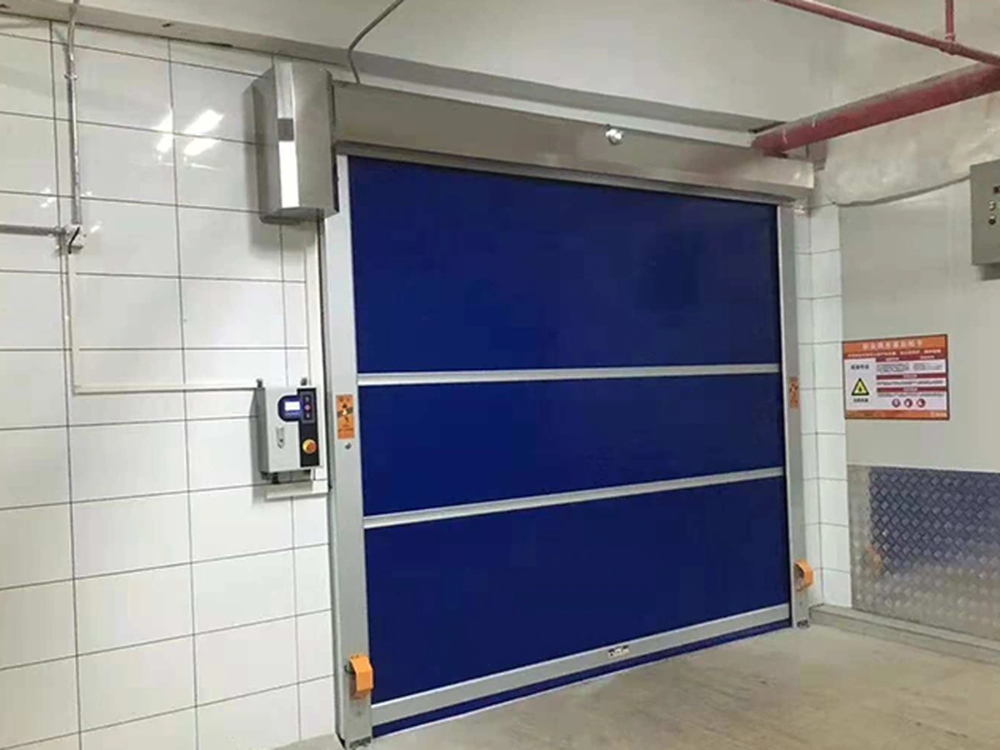
GUDESEN works with facilities that move people, pallets, forklifts, and temperature-sensitive goods through the same openings every day. In that kind of warehouse, energy waste rarely comes from one dramatic failure. It usually comes from small door habits repeated hundreds of times: a door left open while a forklift waits, a loose seal around the guide rail, or an automatic door that opens wider than the traffic actually needs. For buyers comparing warehouse doors, the real question is not only whether the door opens. It is whether the door helps control air infiltration while keeping warehouse traffic moving. A well-specified high speed door can reduce open time, support cleaner zones, and make the building easier to manage without asking operators to slow down normal work.
Why Do Warehouse Doors Waste Energy Even When They Look Closed?
Many warehouse doors look acceptable from a distance, yet still allow air infiltration around the sides, bottom seal, header, or damaged curtain area. Once forklifts and workers begin moving through the opening, the loss becomes larger. Warm air enters cooled zones. Conditioned air escapes from production areas. Dust, humidity, and outdoor air pressure move through gaps that may not be obvious during a quick walk-through.
Open Time Drives Energy Loss
The problem is worse where the door is opened repeatedly during receiving, dispatch, or internal material transfer. A conventional industrial door may stay open long enough for air to exchange between two spaces several times. Even a good aluminum door can become inefficient if it is slow, poorly sealed, or not matched to the actual opening frequency. Buyers should therefore treat door selection as part of building operation, not as a simple hardware purchase.
How Do Automatic Doors Cut Open-Time Loss?
An automatic door reduces energy loss by shortening the time an opening stays exposed. A radar sensor, geomagnetic loop, pull rope, or remote control can trigger the door only when traffic approaches. The PVC High Speed Door from GUDESEN is designed for frequent industrial movement, with opening speed, closing speed, control options, and sealing details that support fast operation in warehouses, workshops, logistics areas, and clean production zones.
Control Settings Matter
Speed alone is not enough. If the door closes quickly but reopens too often, the facility still loses air. If the sensing range is too wide, every passing worker may trigger the opening. If the closing delay is too long, the automatic doors behave like ordinary warehouse doors left open by habit. Buyers should ask suppliers how radar sensitivity, half-open settings, remote control, geomagnetic loops, and manual pull ropes can be configured for real traffic patterns.
Where Does Air Infiltration Usually Start?
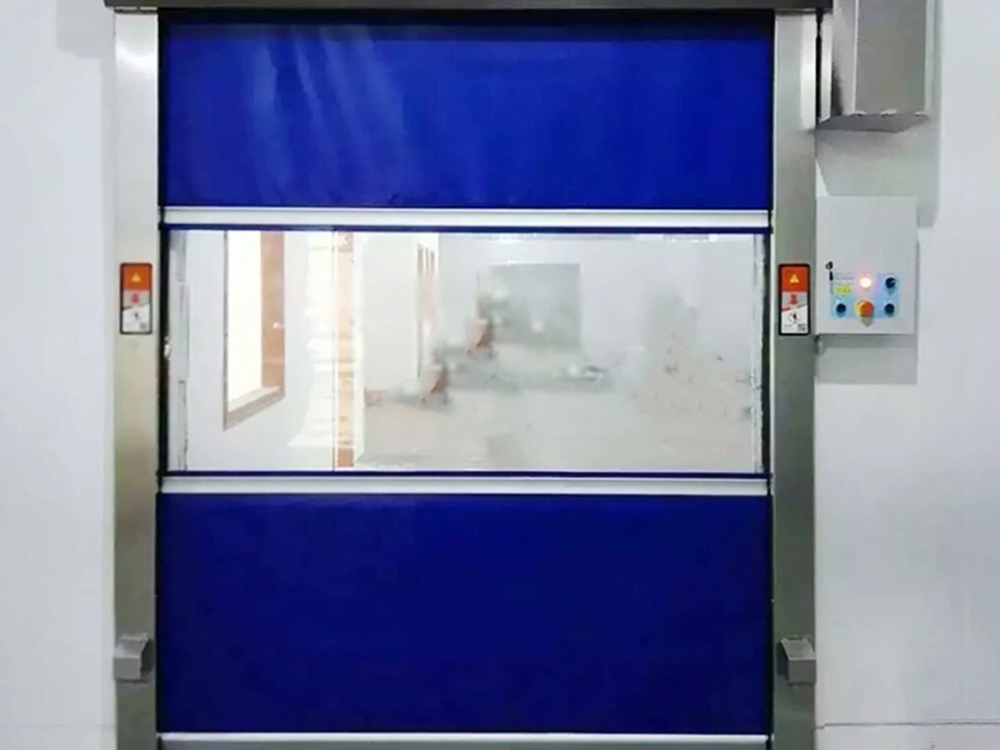
Air infiltration often begins at points that purchasing teams do not check carefully enough. The side guide may not hold the curtain tightly. The bottom seal may not sit evenly on the floor. The top structure may leave a gap around the roller area. Curtain damage from forklift contact can also create small leaks that grow over time. These leaks may not stop production, but they quietly increase the load on air-conditioning, heating, humidification, or dust-control systems.
A high speed door should be reviewed as a full system: curtain material, guide rail sealing, brush contact, windproof strips, control box, safety sensors, and recovery behavior after impact. The broader High Speed Door line gives buyers several options, but the best choice depends on temperature difference, traffic frequency, opening size, and whether the area needs clean separation or simple warehouse access.
How Should Buyers Compare PVC, Aluminum, and Insulated Options?
PVC doors are often a practical choice for frequent movement because the curtain is light, fast, and easier to reset after some impacts. An aluminum door or rigid aluminum panel door can make sense when the opening needs stronger structure, better wind resistance, or a more durable hard-panel look. For cold rooms or temperature-sensitive storage, an insulated product may be needed because speed alone cannot control heat transfer through the door body.
If the warehouse connects to refrigeration, food handling, or a cold-chain area, buyers should also review the Cold storage Insulation Roller Shutter Door. For ordinary warehouse traffic, the decision may center on how often the automatic door cycles per day, whether forklifts hit the opening, and how much pressure difference exists between two areas. The most useful supplier conversation is not “Which door is cheapest?” It is “Which door reduces air infiltration without creating a traffic bottleneck?”
What Should Be Confirmed Before Ordering?
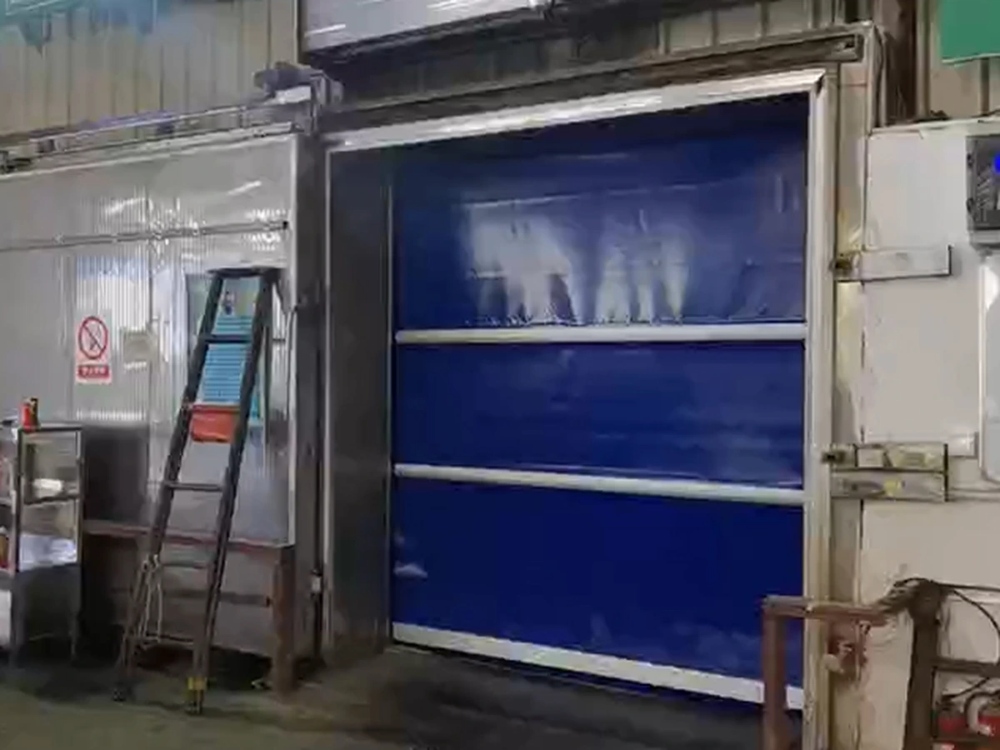
Before placing an order, buyers should document the opening width and height, wall material, available side room, ceiling clearance, power supply, indoor and outdoor temperature difference, and forklift route. The door file should also include traffic volume by shift. A door serving ten forklift trips per day does not need the same control logic as a door serving continuous warehouse traffic during loading hours.
Control Modes Belong in the Order File
Buyers should ask for control options in writing. For example, one opening may need radar outside and manual button inside. Another may need geomagnetic detection for forklifts and half-open mode for pedestrian movement. A third may need interlocking between two automatic doors to reduce pressure exchange. These details affect how much energy the building actually saves after installation.
How Can GUDESEN Support Better Warehouse Door Decisions?
GUDESEN can help buyers compare product types, control modes, and sealing needs before the door is produced. The company information on About Us and its product pages show a product range that covers PVC, cold storage, self-recovery, stacking, flexible, and aluminum door options. That range matters because a single product name rarely answers every warehouse condition.
If your team is replacing slow warehouse doors, adding automatic doors to a new logistics route, or trying to reduce air infiltration around an industrial door opening, prepare the opening details and traffic pattern first. Then Contact Us with the site conditions, preferred control mode, and installation limits. A clearer project file usually leads to a better door specification and fewer changes during installation.
Which Operating Details Should Be Written Into the Specification?
A useful specification should describe the door opening as an operating point, not only as a size. Buyers should record the expected number of openings per shift, the largest vehicle passing through, the common waiting position for forklifts, and the reason the door is being upgraded. If the main loss is air infiltration, the supplier needs to know the temperature difference and pressure condition. If the main problem is warehouse traffic, the supplier needs to know whether the route is one-way, two-way, or shared with pedestrians.
It is also worth noting what the new door should not do. It should not open for every nearby movement outside the lane. It should not stay fully open when a half-open height would be enough. It should not require workers to disable sensors to keep production moving. When these operating details are written into the inquiry, the automatic door can be configured around the site instead of being treated as a standard warehouse doors replacement.
Conclusion
Automatic doors can help warehouses lower energy waste when they are specified around real traffic, not only around opening size. The main gains come from shorter open time, better sealing, suitable control modes, and a door structure matched to the temperature and pressure difference around the opening. Buyers should compare PVC, aluminum, and insulated options carefully, then confirm sensors, guides, curtain materials, and safety devices before ordering. A high speed door will not fix every building issue, but it can reduce repeated air loss when it is chosen for the right opening and operated with the right settings.
For final sizing, control mode, and sealing advice, send the opening data through Contact Us so the door can be matched to the actual warehouse route.
FAQs
Q1: Can automatic doors reduce air infiltration?
A1: Yes, if speed, sealing, and sensor settings match the actual opening traffic.
Q2: Is an aluminum door better than PVC?
A2: Not always. Aluminum is stronger, while PVC often suits frequent fast movement.
Q3: What should buyers send before requesting a quotation?
A3: Share opening size, traffic frequency, temperature difference, power supply, and control preferences.