




How Much Load Capacity Does a Warehouse Dock Leveler Need?
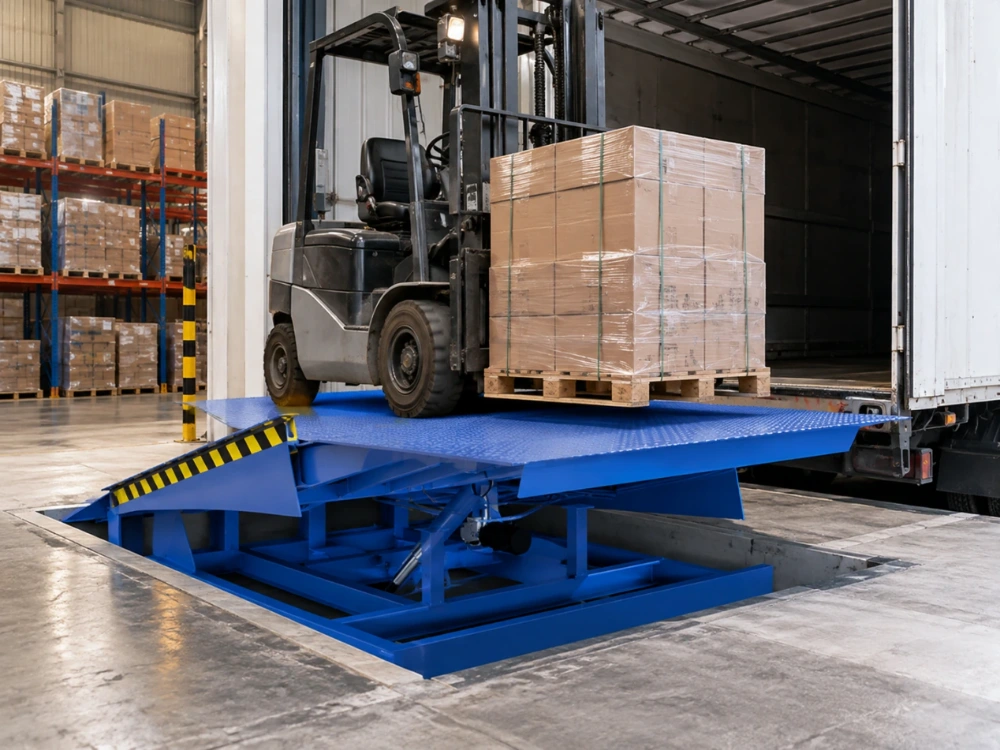
A warehouse dock leveler should not be selected from pallet weight alone. The more useful starting point is the heaviest forklift that will actually cross the platform, the maximum load it carries, and what happens while that combined weight is moving between the loading dock and the truck.
That distinction matters because a parked machine and a moving forklift do not place the same demand on a platform. Braking, acceleration, wheel concentration, transition angle and daily traffic all affect the working condition.
For procurement teams, this changes the question from “How many tons is my cargo?” to “What is the heaviest moving condition this loading bay must handle repeatedly?”
Why Is Dock Leveler Capacity Easy to Misjudge?
Capacity looks like a simple specification because it is expressed as a number. The number is only useful when everyone understands what it represents.
Why Is Cargo Weight Alone Not Enough?
Imagine a pallet weighs 1,500 kg. That does not mean a dock leveler only needs to support 1,500 kg.
The forklift itself may weigh several tons. A battery, attachment, forks and other equipment add to that mass. Once the forklift carries the pallet onto the platform, the dock leveler is supporting the moving vehicle and its load together.
That combined condition is the starting point for a proper forklift load review.
What Is the Difference Between Static and Dynamic Load?
Static load describes a condition where the supported load is not travelling across the platform.
Dynamic load is more relevant to normal loading work because the forklift is moving. Yingli’s dock equipment specifications distinguish between these two conditions rather than treating them as interchangeable.
The distinction also explains why buyers should not compare two suppliers by reading one capacity figure without asking what that figure means.
The same nominal number can be misleading if one quotation describes static capacity and another describes a dynamic load.
What Should Be Included in the Forklift Load Calculation?
The safest procurement brief starts with actual equipment, not an estimated “average” warehouse condition.
Which Forklift Weight Should Be Used?
Use the heaviest forklift that may enter the loading bay, even if it is not the machine used most often.
Record its actual operating weight, not just its nominal lifting capacity. Battery-powered equipment can carry a substantial battery mass, and attachments also change the final vehicle weight.
The RFQ should include the forklift model, operating weight, battery weight where relevant, attachments, rated lifting capacity, maximum pallet or cargo load, wheel arrangement and normal crossing frequency.
A warehouse using several forklift models should not size the dock leveler around the smallest one merely because it performs most of the daily trips.
Why Does the Maximum Cargo Matter More Than the Average?
Average pallet weight is useful for operational planning, but it is a weak basis for equipment capacity.
If most pallets weigh 800 kg but a production line regularly sends 2,000 kg loads through the same loading dock, the heavier case belongs in the specification.
The same principle applies to attachments. A paper-roll clamp, fork positioner or other attachment should be considered as part of the operating equipment rather than treated as an occasional accessory.
This is why a forklift load record is more useful than a sentence saying “the warehouse handles medium-duty goods.”
How Should Buyers Read a Dock Leveler Capacity Rating?
Capacity should be reviewed as part of a complete model configuration.
Why Must Dynamic Load Be Matched to a Specific Platform?
Yingli’s loading equipment combines the platform panel, reinforcement structure, lip, base frame and hydraulic mechanism into one working assembly. Increasing load requirements can affect more than one of those parts.
It would therefore be a mistake to take a platform designed for one working condition and assume that changing only the hydraulic cylinder creates a higher-capacity model.
Panel thickness, reinforcement, lip structure and base-frame requirements may also need to change.
For buyers establishing a new loading area, browse Yingli unloading platform options before freezing the pit and surrounding civil work.
What Does a Real Configuration Look Like?
A current telescoping configuration, for example, is offered with an 8-ton dynamic load rating and 10-ton static load rating, with a stated forklift application of up to 3.5 tons for that configuration.
Those figures should not be copied to a different project automatically. They show why capacity needs to be read together with the selected platform and forklift application.
The same product family can also be discussed for non-standard dimensions or larger-tonnage requirements when the site falls outside the regular configuration.
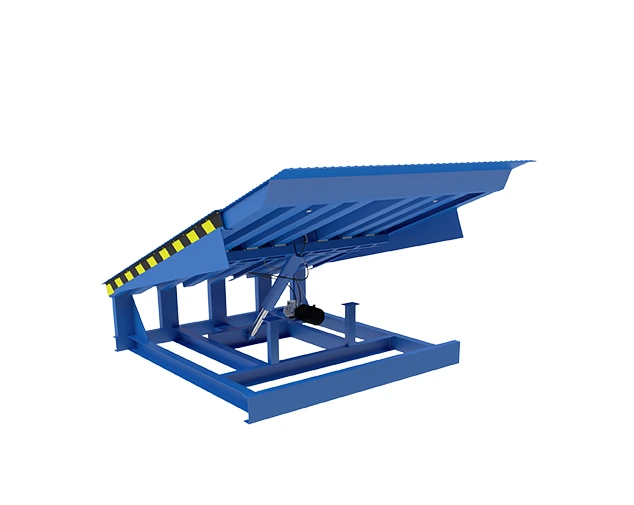
Buyers who need the retractable-lip structure can review telescoping lip dock leveler specifications together with their truck and forklift data.
Does Dock Leveler Type Change the Capacity Question?
Yes, but the type should be considered after the working load is understood.
A flip-lip and a telescoping-lip platform may both bridge the warehouse floor to a truck. The way the lip reaches and engages the truck is different, which changes how the platform fits the loading operation.
Where Does a Flip Plate Dock Leveler Fit?
A flip plate dock leveler uses hydraulic movement to raise the main platform and operate the lip. It is commonly used where the dock arrangement and truck position are relatively predictable.
Yingli can provide non-standard size customization and consult on larger-tonnage requirements for these platforms. That is useful for factories and distribution centers where the original dock pit does not match a regular catalog dimension.
For a project using this structure, check the flip plate dock leveler configuration after confirming the required dynamic load and loading-bay dimensions.
Where Does a Telescoping Lip Matter?
A telescoping lip extends outward to reach the truck bed. That controlled extension can be useful where vehicles do not always stop at exactly the same distance from the dock face.
Capacity still comes first. A longer or more controllable lip does not remove the need to check forklift weight and cargo. It solves a different part of the loading problem: how the platform physically reaches the vehicle.
Keeping these two questions separate makes procurement easier. First confirm what the dock leveler must carry. Then determine how it must connect to the vehicle.
Can Pit Dimensions Affect the Capacity Decision?
They can affect the equipment configuration and installation, even though pit size itself is not a substitute for load rating.
Why Should the Existing Pit Be Measured Early?
A dock leveler is integrated into the loading bay. Platform length, width, height and pit dimensions must therefore match the building.
Regular telescoping configurations include a 2,000 mm platform width and 600 mm platform height, with the platform length selected to suit the project. The excavation dimensions change with the selected platform length.
For retrofit work, an existing pit may be the most restrictive part of the project. Changing a dock leveler is relatively straightforward compared with discovering after delivery that the concrete opening needs extensive reconstruction.
A useful survey records pit width, length and depth at several points, together with dock height and surrounding concrete condition.
Why Does the Truck Fleet Matter Too?
The leveler does not operate in isolation from the yard.
Record the highest and lowest truck-bed positions normally served by the bay. Also note how close vehicles can reverse to the dock and whether third-party carriers use trailers with noticeably different dimensions.
A loading bay receiving one repeat fleet is easier to define than a distribution center handling many vehicle types.
The capacity may be adequate while the lip engagement is poor. Conversely, a platform may reach the truck comfortably but still be underspecified for the heaviest forklift load. Both conditions have to work at the same time.
What Operating Conditions Can Increase Stress on the Platform?
Two warehouses can use the same forklift and still create different working conditions.
How Does Traffic Frequency Change the Specification?
A bay crossed ten times per day experiences a different duty pattern from one used throughout two or three shifts.
Daily crossing frequency should therefore be included in the RFQ. The buyer should also explain whether the forklift pauses on the dock leveler, crosses at a steady speed, or frequently stops and starts around the transition.
Repeated heavy operation deserves more attention to platform structure, reinforcement and maintenance access.
Why Do Transition Angle and Driver Behavior Matter?
A steep transition between the warehouse and trailer changes how the forklift approaches the platform.
Braking hard on the leveler, turning while crossing, or striking the transition at speed can create harsher operating conditions than a straight, controlled crossing.
The practical specification should describe the real loading routine rather than assuming ideal driver behavior every time.
That does not mean buyers need to calculate structural forces themselves. It means the supplier should receive enough information to choose a configuration that reflects normal use.
Which Safety and Maintenance Features Should Buyers Check?
Capacity protects the structure, but a complete loading dock also needs safe servicing and predictable daily operation.
Which Features Help During Operation and Maintenance?
Yingli’s telescoping platform configuration includes anti-pinch and anti-shear design, overload protection and a safety wedge for maintenance. The pivot area uses self-lubricating shaft sleeves intended to reduce routine maintenance requirements.
The flip plate structure can use shot blasting followed by electrostatic spray treatment for corrosion protection. Modular construction also helps with daily inspection and service access.
These details matter because the loading dock sits at a high-contact point between the building, truck and material-handling equipment.
Why Is Supplier Support Part of the Specification?
Capacity selection often involves information from several teams: procurement, warehouse operations, forklift suppliers, civil contractors and the dock-equipment manufacturer.
Yingli can review customer requirements before production, provide technical solution support, and manufacture around confirmed project specifications. Remote installation support, installation documents or videos can also be provided for overseas projects.
The standard service arrangement includes a one-year warranty with continued maintenance support afterward.
For a capacity decision tied to a real forklift fleet, buyers can request a load-capacity check for the loading bay with the equipment and pit data attached.
What Information Should Be Sent With a Dock Leveler RFQ?
A useful RFQ does not need to be long, but it needs the right numbers.
Which Details Help the Supplier Select the Capacity?
Send the loading bay quantity, existing or planned pit dimensions, dock height, truck-bed height range, heaviest forklift model, forklift operating weight, maximum cargo weight, forklift attachments, daily crossing frequency, indoor or outdoor installation, available power supply, required platform type if already decided, and site drawings or photographs.
If several loading bays serve different operations, do not assume one specification must fit them all. A heavy production bay and a light dispatch bay may need different dock leveler configurations even when their concrete pits have identical dimensions.
This information also makes quotations easier to compare because every supplier is responding to the same working condition.
Conclusione
The right dock leveler capacity begins with the moving forklift, not the pallet by itself. Record the heaviest forklift that will use the loading dock, its operating weight, attachments, maximum cargo and crossing frequency. Then compare that working condition with the dynamic load rating of the proposed platform.
After capacity is clear, check lip type, truck variation, pit dimensions, transition conditions and safety features. A flip plate and a telescoping platform can solve different loading-bay problems, but neither should be selected before the actual forklift load is known.
Capacity is therefore not a catalog number to choose in isolation. It is the result of matching the loading bay, vehicle fleet and material-handling equipment to one platform configuration.
Domande frequenti
Q1: Should dock leveler capacity be based only on forklift weight?
A1: No. The forklift operating weight, maximum carried load and relevant attachments all need to be considered. The platform is supporting the moving combination, so cargo weight alone does not describe the actual forklift load.
Q2: What is dynamic load on a dock leveler?
A2: Dynamic load refers to the working load while equipment such as a forklift moves across the platform. It should be distinguished from static load because movement, wheel concentration and transition conditions change how the dock leveler is used.
Q3: What information should I send before asking for a dock leveler quote?
A3: Send the pit dimensions, dock height, truck-bed range, forklift model and operating weight, maximum cargo, attachments, daily traffic and installation conditions. These details allow the supplier to match the loading bay to an appropriate platform and capacity instead of quoting from pallet weight alone.
Precedente: Nessuno
Successivo: How Do You Choose Industrial Doors When Headroom Is Limited?