




Automatic Sliding Door Access Control: Fail-Safe or Fail-Secure?
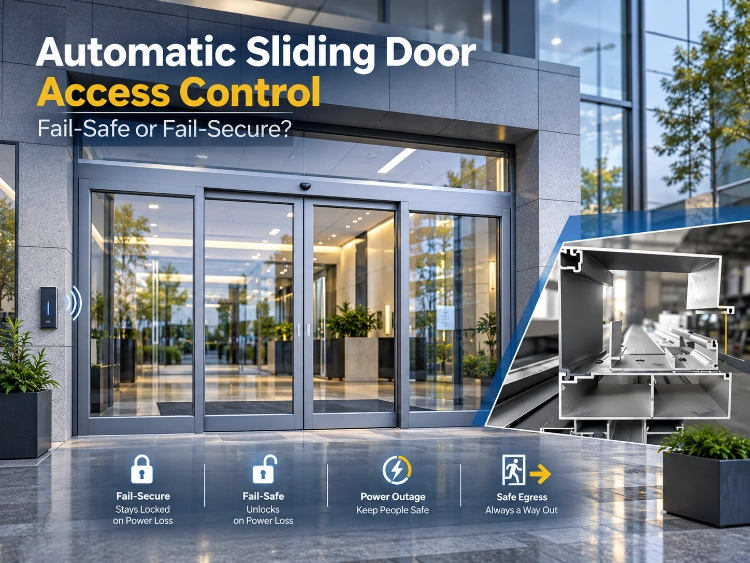
A two-leaf tempered glass entrance on a public escape route answers to three documents. They usually come from three different desks.
One document comes from the facility team and covers what the door does on a working day. A second comes from the security contractor and covers how a cardholder gets in. The third comes from the fire consultant and covers how the building empties.
All three documents apply to the same door. One line decides which one wins: what the door does once power is removed.
Three questions settle the specification. What opens the door while power is normal. What the door does once power fails. What a person can do on the way out.
What the Entrance Had To Do in Each State
Normal Power: Who Opened It, and How
On a working day an entrance answers a radar, an auto switch or a remote. Add access control and the options widen. GUDESEN lists an optional access-control system on its sliding operators. The configurations include a card machine, a proximity card machine, a remote control motor lock and an access control network host.
The first decision is which of those the door must answer. Each choice moves the cable, the controller input and the position of the hardware on the frame or the leaf.
Power Failure: Which Way the Door Failed
Fail-safe releases the locking element when power is removed. Fail-secure holds the opening closed.
The two settings protect different risks. An entrance on a public escape route releases. A storeroom holding stock stays locked, and one site can carry both settings on different doors.
A sliding entrance can also keep working through a short outage. GUDESEN’s sliding operators list an optional power backup for power failure, DC24V 7Ah ×2, with a supply of AC180–250V at 50–60Hz. The next question is what stays powered while the batteries carry the entrance. The operator. The safety sensors. The controller. The access reader.
The Egress Route on the Worst Day
Walk the egress route the way a visitor meets it during an outage. The leaf is closed. The power is out. The person still has to leave.
Three options leave the building open. A leaf that releases and slides by hand. A passage beside the entrance. An exit device the door hardware supports.
Matching the Operator to the Leaf
Weight and Width Set the Operator Model
Operator choice follows the leaf rather than the opening width alone. GUDESEN lists two sliding operator models, and the difference between them sits in the leaf each one carries.
|
Item |
GMA-90 |
GMA-150 |
|
Leaf weight, single |
90kg × 1 |
150kg × 1 |
|
Leaf weight, double |
90kg × 2 |
150kg × 2 |
|
Leaf width, single |
700–1300mm |
700–1500mm |
|
Leaf width, double |
700–1100mm |
700–1300mm |
|
Opening speed |
100–550mm/s |
100–550mm/s |
|
Opening time |
1–20 seconds |
1–20 seconds |
|
Motor |
DC36V brushless DC servo |
DC36V brushless DC servo |
|
Ambient range |
−20 to 50°C |
−20 to 50°C |
Weigh the finished leaf, not the glass alone. A thick tempered panel with its frame and hardware adds up faster than the drawing suggests. A leaf above the operator’s figure moves the specification up a model. The operator models sit with the entrances they carry on the automatic sliding glass door range.
Where the Access Hardware Physically Went
A hinged door has a standard lock position. A sliding leaf does not. The mounting position becomes a project decision. Settle where the hardware sits without fouling the track.
Three things belong on the fabrication drawing. First, where the locking element mounts, on the fixed frame or the moving leaf. Second, how the cable reaches that hardware while the leaf travels; the route has to survive thousands of cycles. Third, where the position signal comes from. The controller needs to know whether the leaf is open, closed or travelling.
The Interface List for the Access-Control Supplier
The Function List
The access supplier needs a written list, not a spoken description. GUDESEN lists four configurations on its sliding operators: a card machine, a proximity card machine, a remote control motor lock and an access control network host. Optional accessories add a safety light and a hand pressure switch.
Each signal then needs a defined behaviour. That behaviour is a field to confirm with the operator supplier for this project. What does a card read do to the leaf. Does a hold-open command have to release it. What does the door do when a sensor in the safety chain faults.
Battery Runtime and Who Gets Told
Two questions fix the backup specification. How long does the entrance have to keep working, and what counts as working. A door that opens once and then stands open is one outcome. A door that keeps opening and closing through the outage is another.
Ask for the alarm path as well. Once the batteries take over, somebody needs to know. The event that drains them comes next.
Writing It Into the Entrance Specification
The Lines Agreed Before Fabrication
Six lines cover most of the risk: operator model and leaf weight; fail direction on power loss; backup runtime and what it powers; the access devices the door has to answer; the mounting position of the locking hardware; and the hand-release or exit arrangement.
Put them in the same document as the entrance dimensions, so the three desks that write three specifications read one page.
What a Glass Entrance Added
Glass brings its own conditions. GUDESEN’s automatic sensor tempered glass sliding door for store use lists tempered safety glass panels, a DC24V brushless motor, control by auto switch, radar or remote, and infrared obstruction detection sensors.
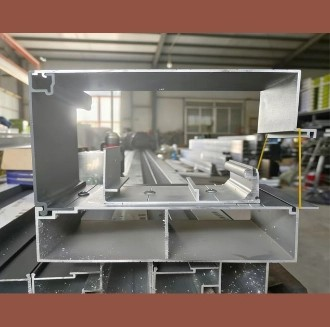
The safety chain shapes the access plan. A reader that commands the door must not create a closing movement into a person the sensor has already detected. Confirm that logic in writing. GUDESEN fits the operators being specified here to the entrances it builds. A heavier alloy frame with a wider leaf moves to the aluminum alloy glass sliding door profile.
An entrance also meets the building around it. Confirm the cable routes, the fixing surface and the position of the locking hardware before the frame is fabricated. Access hardware mounted afterwards costs a second site visit.
Conclusion
The access setting is where three specifications meet. Leaf weight fixes the operator model. The risk behind the door fixes the fail direction. The person who arrives during an outage fixes the exit arrangement. None of those is the installer’s to choose on site. They go into the entrance schedule before the frame is ordered.
FAQs
Q1: Should an automatic sliding door be fail-safe or fail-secure?
A1: It follows what the door protects and where it stands. On an escape route the locking element releases when power is removed, so people can leave. A storeroom holding stock stays locked. One site can carry both settings on different doors.
Q2: Does an automatic sliding door need battery backup?
A2: Not every entrance needs it. The question is what still has to work during an outage, and for how long. GUDESEN lists an optional DC24V 7Ah ×2 backup for power failure on its sliding operators. Name the runtime and the powered devices in the specification.
Q3: Where does the card reader go on a sliding entrance?
A3: Either one, decided before fabrication. The reader position sets the cable route, and the controller needs a position signal to know where the leaf sits. GUDESEN lists card machines, proximity card machines and an access control network host among the optional configurations.