




Why Does an Automatic Sliding Door Sensor Keep False Triggering?
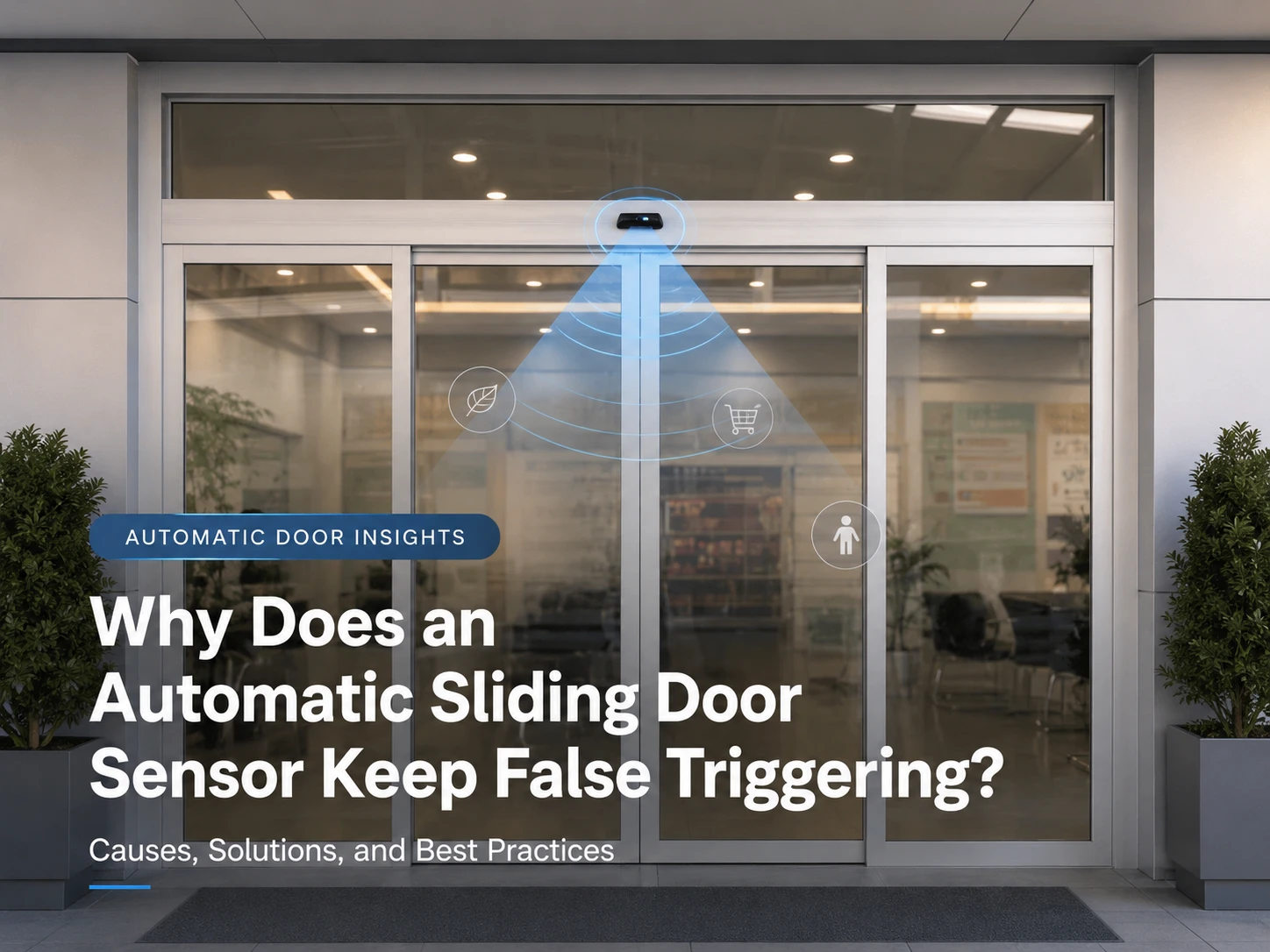
A commercial sliding door that opens for nobody is more than an annoyance. Repeated false openings increase unnecessary door cycles, interrupt indoor temperature control, distract staff, and make users question whether the entrance is working properly.
The automatic sliding door sensor is often blamed first. Sometimes the sensor really is faulty. Quite often, however, the problem is the detection field, mounting position, traffic around the entrance, control logic, or wiring between the sensor and controller.
That distinction matters. Replacing a sensor without identifying why it is triggering can leave the same problem in place.
Why Does an Automatic Sliding Door Sensor Detect People Who Are Not Entering?
Radar-based activation works by watching a defined approach area. If that detection area extends too far into nearby pedestrian traffic, the sensor may react correctly to movement that the building owner never intended to use as an opening command.
That is not necessarily sensor failure. It can be a setup problem.
Is the detection zone covering cross traffic?
Consider a store entrance facing a sidewalk.
People approaching the entrance should activate the door. People walking parallel to the storefront may not need to.
If the radar field extends too far sideways, both movements can look relevant to the sensor. The result is repeated opening even though nobody intends to enter.
The same issue can occur where a door faces:
-
A reception waiting area
-
A corridor intersection
-
A checkout queue
-
Moving displays
-
A nearby escalator
-
Heavy pedestrian cross traffic
The sensor position and detection area should therefore be commissioned around the real movement pattern, not just around the physical doorway.
GUDESEN automatic glass-door systems can use radar, manual switches, access cards, and fingerprint opening methods. Buyers can see one practical sensor-operated tempered glass door when planning a commercial entrance.
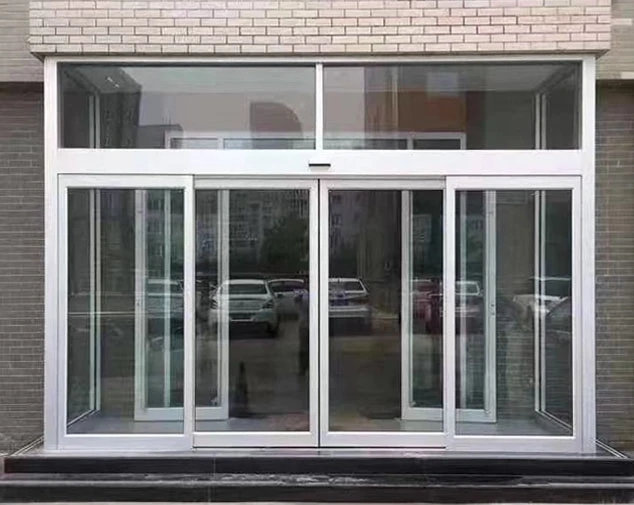
Is the activation field too close to the moving door?
The door itself should not continually become part of the sensor’s useful detection field.
A poorly adjusted field can contribute to unstable operation when moving parts repeatedly enter the area being monitored. Radar angle, detection distance, mounting height, and the actual door travel should be checked together.
If false triggering begins immediately after installation or after the sensor has been moved, setup should be checked before assuming the sensor has failed.
Is the Sensor Faulty, or Is It Reading the Wrong Type of Signal?
An automatic entrance may use more than one sensing function.
One device may tell the controller that somebody wants the door to open. Another may protect the doorway while somebody is standing in the closing area.
Mixing up these functions makes troubleshooting much harder.
What is the difference between activation and safety detection?
Activation sensing asks:
Should the door open?
Safety or presence sensing asks:
Is it safe for the door to close?
GUDESEN automatic sliding glass-door configurations can include infrared obstruction detection and optional safety photoelectric protection. Radar can be used as an opening method, while access-control devices can provide a separate opening command.
These signals serve different purposes.
A technician investigating false opening should therefore determine which input is actually commanding the door. Replacing a safety device when the radar input is causing the unwanted opening will not solve the problem.
The available door fittings for automatic entrances can also be considered when planning how sensing, access control, and other entrance components will work together.
Can access control create what looks like a sensor problem?
Yes.
Commercial entrances may use:
-
Radar
-
Manual switch
-
Access card
-
Fingerprint access
-
Remote control
-
Safety photoelectric devices
If several inputs are connected to the same automatic-door controller, the door can open because of any permitted input.
Before declaring the automatic sliding door sensor not working, isolate which signal is responsible. A door opening at the wrong time is not always receiving a wrong sensor signal. It may be receiving a correct command from another connected device.
That is why control logic should be defined before installation.
What Should You Check When an Automatic Sliding Door Sensor Is Not Working?
The phrase automatic sliding door sensor not working can describe very different symptoms.
The door may:
-
Stay closed when somebody approaches
-
Stay open and refuse to close
-
Open intermittently
-
Open with no obvious pedestrian nearby
-
React only from one direction
-
Work after reset but fail again later
Those symptoms should not all lead to the same diagnosis.
Start with the simplest physical checks
Check whether the sensor has power, whether its face is clean, whether it has been physically moved, and whether the mounting position has changed.
Then confirm whether the problem affects activation only or also the safety function.
If the door opens correctly from a manual switch but not from radar, the fault path is narrower than if the entire automatic system is unresponsive.
Likewise, if a card reader opens the door but approaching pedestrians do not, the operator itself may be working while the activation circuit needs attention.
Check the system before replacing parts
GUDESEN automatic-door machines combine the motor, controller, guide rail, radar, hanger, belt, pulley, and anti-sway device in the complete operating system.
That means sensor troubleshooting should not stop at the plastic housing above the door.
Connections, controller inputs, door position, safety inputs, and access-control signals may all affect what the user sees.
When an automatic sliding door sensor not working complaint occurs after a wiring change or component replacement, the new connection should be checked before another component is purchased.
Why Is the Automatic Sliding Door Sensor Wiring Diagram So Important?
Sensors are not universal plug-and-play devices.
Different sensor and controller combinations can use different terminal arrangements, supply requirements, signal outputs, and safety connections. That is why an automatic sliding door sensor wiring diagram should match the actual equipment being installed.
A generic online drawing can show the principle. It should not automatically be treated as the correct wiring for another controller.
What should a technician identify before wiring?
Before using an automatic sliding door sensor wiring diagram, confirm:
-
Sensor model
-
Controller model
-
Supply voltage
-
Power terminals
-
Signal output
-
Common terminal
-
Activation input
-
Safety input
-
Access-control connections
-
Existing remote-control or lock modules
GUDESEN’s automatic-door configurations may combine radar with access-control equipment, safety lights, card systems, remote locks, and other control devices. These connections need to be planned as one system.
If the wiring documentation supplied with the equipment differs from an older diagram, use the documentation for the actual model.
Why can replacement sensors cause unexpected behavior?
A replacement sensor may physically fit the same location while using a different output or adjustment setup.
After replacement, verify both the electrical connection and the detection field.
A door that suddenly begins false triggering after sensor replacement may have a wiring problem, but it may also simply have a wider detection area than the previous sensor.
Both checks matter.
What Actually Changes Automatic Sliding Door Sensor Price?
Price comparisons are useful only when buyers are comparing similar functions.
An automatic sliding door sensor price can vary because one device may provide simple activation while another combines more advanced detection, safety functions, adjustment options, or integration requirements.
The lowest quoted sensor is not automatically the lowest-cost entrance solution if additional devices still have to be added.
Are you comparing activation-only and combined functions?
Before comparing automatic sliding door sensor price, ask what the quoted device is expected to do.
Is it only opening the door?
Does it also detect presence in the doorway?
Does the project need safety photoelectric protection?
Will it work with card access, fingerprint opening, or another controller input?
A commercial entrance should be priced from the required control logic first.
GUDESEN automatic sliding glass-door systems can support several activation and access-control methods, allowing the entrance configuration to be matched to the building rather than forcing every project into the same sensor package.
Why can automatic sliding glass door sensor price differ between projects?
Automatic sliding glass door sensor price is affected by the actual configuration around the sensor.
A simple retail entrance using radar activation may have different requirements from an office entrance combining controlled access and safety protection.
The number of entrances, required accessories, existing control system, installation conditions, and whether old equipment is being reused can all change the final scope.
This is why comparing only the automatic sliding glass door sensor price without defining what is included can create misleading quotations.
For buyers evaluating a complete entrance rather than one replacement component, commercial automatic door solutions can provide a broader view of available door and control configurations.
How Can False Triggering Be Reduced Before the Door Goes Into Daily Use?
Most problems are easier to address during commissioning than after the entrance is busy.
Walk through the door from every direction that real users will approach.
Then walk across the entrance without intending to enter.
Stand near the doorway.
Operate nearby equipment or moving displays.
Test the door through manual, radar, and access-control inputs separately.
This reveals whether the detection zone is too large, too narrow, or interacting with another control signal.
For commercial projects, GUDESEN can configure the door around dimensions, entrance use, sensor method, access-control needs, and other project requirements. Remote installation files or videos can also support installation and commissioning, with a one-year warranty and lifetime maintenance support included in the service framework.
Where false triggering needs to be reviewed before production, buyers can send sensor layout details together with doorway dimensions, approach directions, traffic conditions, and required access logic.
Conclusion: Why Does an Automatic Sliding Door Sensor Keep False Triggering?
False triggering does not automatically mean the automatic sliding door sensor is defective.
The problem may come from a detection field that reaches cross traffic, incorrect positioning, another controller input, mismatched access-control logic, or wiring that does not match the actual sensor and controller.
Troubleshooting works better when the system is divided into three questions:
What is asking the door to open?
What is preventing the door from closing?
Which controller input is receiving that signal?
Once those questions are answered, the sensor can be adjusted, rewired, or replaced for a clear reason rather than by guesswork.
FAQs
Q1: Why does an automatic sliding door open when nobody is entering?
A1: The activation field may be detecting nearby cross traffic or another moving object within its configured area. Another connected input, such as access control or a manual control device, may also be commanding the door. Check the active input before replacing the sensor.
Q2: Does a higher automatic sliding door sensor price always mean better performance?
A2: No. The correct sensor depends on the required activation, safety, traffic pattern, controller compatibility, and access-control logic. Compare functions and compatibility rather than price alone.
Q3: Can one automatic sliding door sensor wiring diagram be used for every sensor?
A3: No. Wiring varies by sensor and controller. Use the diagram for the actual models being installed and confirm supply, common, activation, safety, and access-control terminals before connection.